
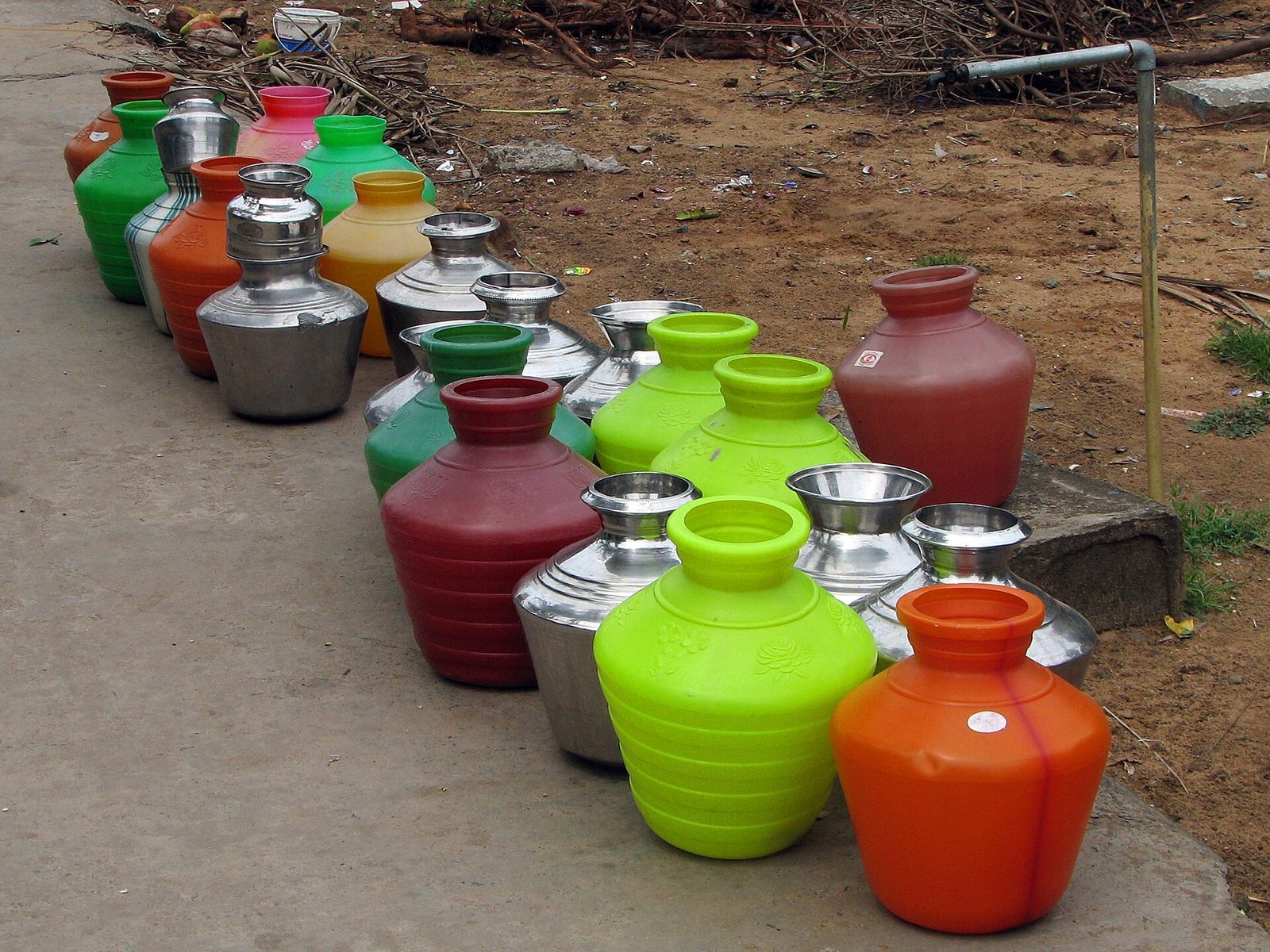
The Karnataka district's administration has ordered private borewells mapped and a list drawn up of villages likely to run short.
In brief
At a District Disaster Management Authority meeting, Chikkamagaluru's Deputy Commissioner said 40 villages in 31 gram panchayats were facing drinking water difficulties, with tankers supplying 16 of them. The Hans India reported the figures on 21 November 2026.
Officials in Chikkamagaluru, a district in Karnataka, are preparing for a long dry season that has started early. The Hans India reported on 21 November 2026 that Deputy Commissioner Bhanwar Singh Meena, chairing a meeting of the District Disaster Management Authority, told departments to work closely together so that neither a drinking water problem for people nor a fodder shortage for livestock goes unaddressed.
Where the shortage stands
Forty villages across 31 gram panchayats, the elected village councils, were already experiencing difficulty with drinking water. Tankers were supplying 16 of those villages.
The measures ordered
The Deputy Commissioner asked that private borewells in rural areas be identified so that scarcity does not set in, and that officials talk to their owners wherever necessary. He also asked for a list of every village expected to face drinking water trouble and continued vigilance in the coming period.
Fodder for 4 lakh animals
Livestock figures presented at the meeting put the district's cattle, buffaloes, sheep and goats at 4,05,340 in total. Their weekly fodder requirement is 11,275 tonnes, against current availability of 2,10,842 tonnes. At the stated weekly need, that stock would last roughly 18 weeks, which is our own calculation and assumes none is added. The Deputy Commissioner called for fodder cultivation under a rural employment scheme and asked for a count of the district's cattle ponds.
What to watch
The report does not say how much water tankers are carrying, how the 40 villages were assessed or how groundwater levels have moved. Those details will show whether private borewells can carry the load or whether they, too, will begin to fail as extraction rises. Any borewell newly pressed into drinking supply also needs a quality test, because water that is plentiful is not automatically safe to drink.
Why it matters
Shortage in November leaves the whole dry season still ahead. Listing vulnerable villages and lining up borewells now is cheaper and calmer than arranging supply in an emergency.
The main source was published on 21 November 2026.
Found an error? See the Corrections Policy.