
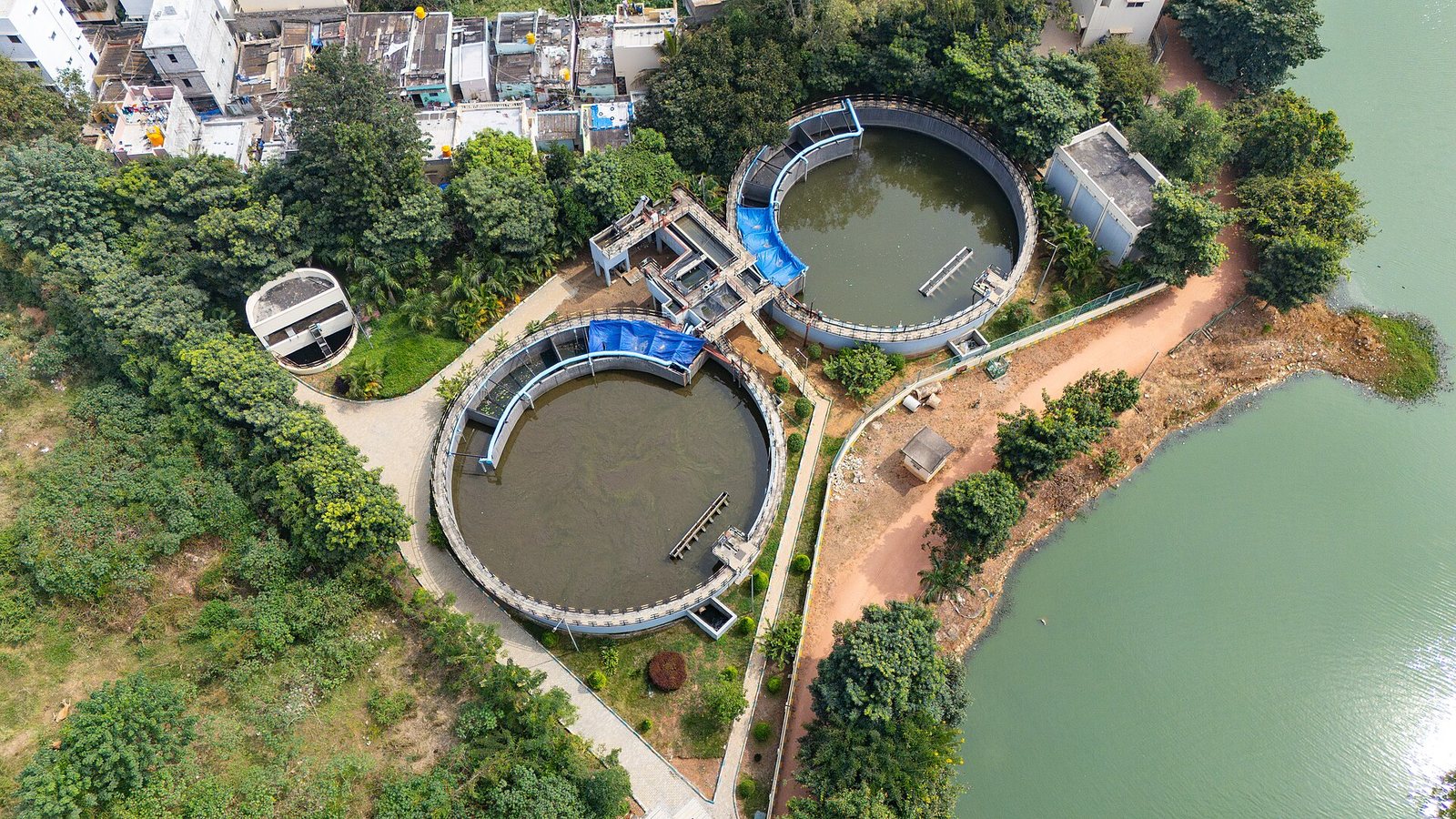
The Rithala and Sen Nursing Home drain plants add 55 MGD, but missing sewer links and weak plant performance remain the harder problem.
In brief
The National Mission for Clean Ganga's empowered committee cleared two sewage treatment plants for Delhi on 12 November 2026, costing Rs 874.49 crore with a combined capacity of 55 million gallons a day, The Tribune reported on 23 November. One will intercept sewage now reaching the Yamuna untreated.
Delhi is to get two more sewage treatment plants as part of the effort to clean the Yamuna. The Tribune reported on 23 November 2026 that the National Mission for Clean Ganga's empowered committee cleared the projects on 12 November, at a combined cost of Rs 874.49 crore and a capacity of 55 million gallons a day (MGD), roughly 250 million litres a day.
The two sites
A 35 MGD plant will come up at Rithala in northwest Delhi at a cost of Rs 509.54 crore. A 20 MGD plant will be built near Indraprastha Metro station, at the outfall of the Sen Nursing Home drain, for Rs 362.95 crore. They address different problems. Rithala is expected to intercept and treat wastewater from a large part of northwest Delhi. The Sen Nursing Home drain is only partly tapped, so extra untreated sewage runs straight into the river, and the new plant is meant to close that gap.
Part of a bigger programme
The two projects belong to a Rs 7,373 crore programme of 13 proposed plants with a combined capacity of 328 MGD, expected to be built over the next three years. The administration plans to raise treatment capacity to 1,500 MGD by 2028. Upgrades to existing plants are expected to add 56 MGD by December 2027, and 35 decentralised plants, small works near where sewage is produced, would contribute another 170 MGD.
The gap that capacity cannot close
The government says the capital already has infrastructure to treat 814 MGD of sewage. Wastewater still enters the Yamuna because several areas lack sewer connections and some existing plants do not meet the prescribed treatment standards. The Tribune also notes that proceedings in the Delhi High Court show gaps in interception and connectivity, and treated water mixing with untreated discharge before it reaches the river.
The newspaper's assessment is that the immediate test is whether neighbourhoods can actually be connected to treatment and whether the treated water meets standards. Without working sewers, interception and steady plant performance, new capacity could remain a construction achievement without a measurable change in the river.
Why it matters
Delhi says it already has infrastructure to treat 814 MGD, yet sewage still reaches the river. Capacity only counts when homes are connected to it and plants meet their standards.
The main source was published on 23 November 2026.
Found an error? See the Corrections Policy.