
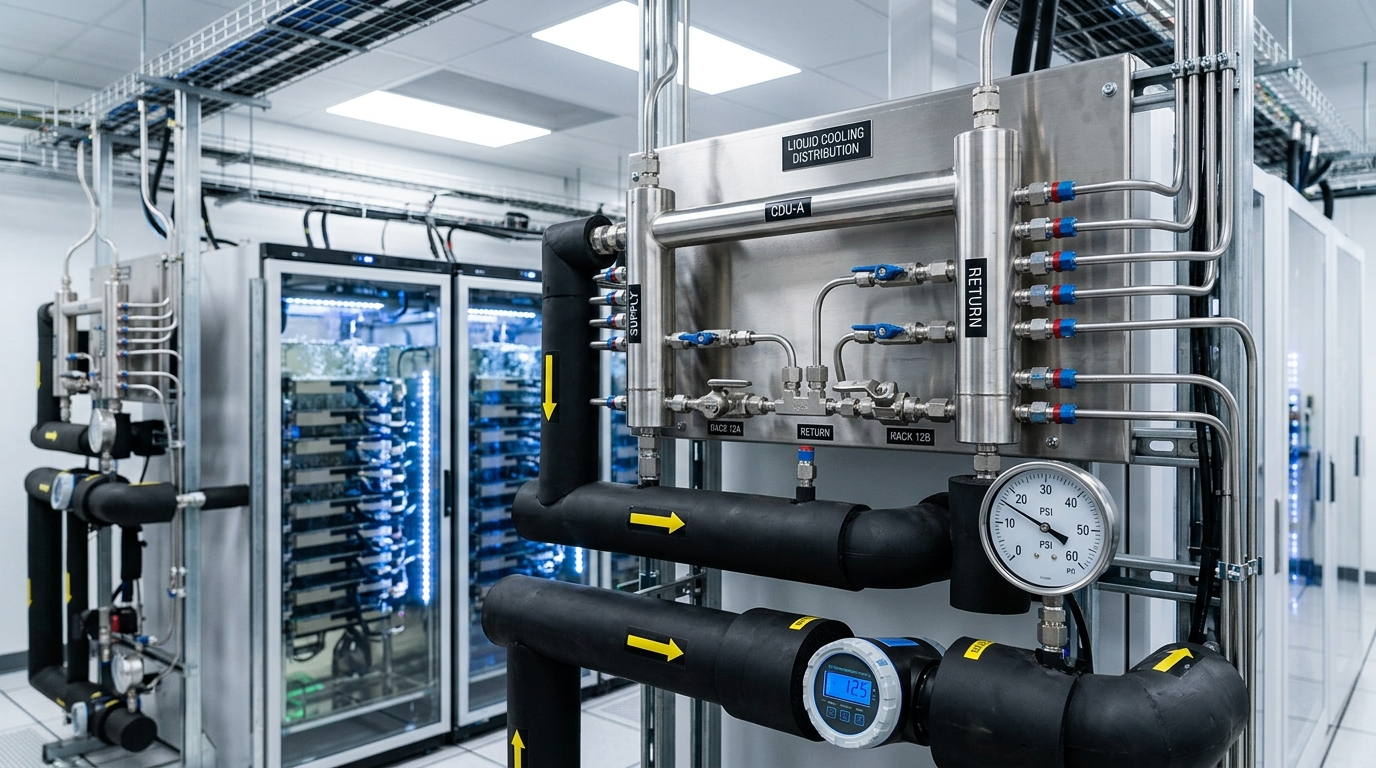
The machines running AI are drawing from the same wells the country is already struggling to refill.
In brief
India's data centre capacity is set to grow roughly six - fold by 2030, and about three - quarters of that capacity already sits in water - stressed regions - cooling demand that no state policy currently requires to be mapped against local water stress before clearance.
There's a genuinely uncomfortable irony sitting inside India's AI boom: the machines being built to process information are drawing from the same groundwater the country is already struggling to keep from running dry.
Where the growth is concentrated
Capacity is projected to expand to 8 - 10 gigawatts by 2030 - a six - fold jump in four years. The problem isn't just the scale, it's the geography: roughly 75% of India's data centres sit in already water - stressed areas, and Mumbai and Chennai alone accounted for about 70% of new data - centre space absorbed in 2025. Hyderabad is projected to face an 870 - million - litre daily water deficit by 2027; Bengaluru already extracts nearly ten times more groundwater annually than it recharges.
The policy gap
No state currently requires water - stress mapping as part of environmental clearance for a data centre, and thermal - impact assessments aren't part of the approval process either. There's an existing template that could apply: Karnataka's 2015 rule already requires thermal power plants to use treated wastewater rather than fresh groundwater for cooling. That rule has simply never been extended to data centres, which sit in a regulatory gap rather than being deliberately exempted.
This isn't only an India story. Morgan Stanley projects global AI data - centre water consumption could reach roughly 1,068 billion litres annually by 2028 - an eleven - fold increase from 2024 levels - which is exactly the kind of demand curve that turns a regional water - stress problem into a global one.
The Karnataka precedent is worth noting precisely because it already exists - a 2015 rule requiring thermal power plants to use treated wastewater instead of fresh groundwater for cooling. Nobody's extended it to data centres yet, but the template for closing this particular gap doesn't need to be invented from scratch; it just needs to be applied to a new kind of industrial water user.
Why it matters
For any industrial or commercial water user near a data - centre cluster, this is a new category of competing demand on the same groundwater and municipal supply lines already under CGWA scrutiny.
Found an error? See the Corrections Policy.
Image: Enterprise Data Center Closed-Loop Liquid Cooling Distribution Infrastructure