
Predictive AI is quietly becoming standard equipment on the plant floor.
In brief
Wastewater operators are increasingly using AI models fed by IoT sensors to predict process upsets, optimise chemical dosing, and flag equipment issues before they cause a discharge violation, rather than relying purely on operator experience and fixed schedules.
The AI pitch in wastewater treatment has quieted down from "autonomous plants" to something narrower and more defensible: models trained on IoT sensor data that predict process upsets and equipment failures early enough to act on them, and that optimise chemical dosing continuously rather than on a fixed schedule.
The numbers behind the pitch
Reported gains from AI - based process optimisation cluster in a believable, unglamorous range: up to 15% reduction in plant energy consumption and up to 14% reduction in chemical reactant use. On the maintenance side, predictive - maintenance deployments have shown an 18% reduction in unplanned downtime and roughly 10% lower maintenance costs - driven by systems that flag failing equipment before it fails, not after.
Where it's actually being applied
Two use cases show up repeatedly. First, dosing optimisation - for example, AI tuning chlorine dosage in chlorine scrubbers to hold odour - control performance while cutting chemical consumption. Second, predictive maintenance tied to digital twins, which forecast the operating status of dosing pump motors specifically to catch failures before they cause an accidental discharge of inadequately treated water.
Models like artificial neural networks, support vector machines and random forests are the workhorses here - nothing exotic, but applied specifically to fault detection and process monitoring where they're outperforming the fixed - threshold alarms that plants have relied on for decades.
The honest read here is that AI in wastewater treatment right now is winning on unglamorous, believable numbers - a 15% energy cut, an 18% drop in unplanned downtime - not on any claim of running a plant autonomously. That's arguably a healthier place for the technology to be than the pitch it was getting a few years ago.
Why it matters
The realistic near - term value is in predictive maintenance and dosing optimisation on existing plants - not a wholesale replacement of skilled operators, which is where the honest ROI case currently is.
Found an error? See the Corrections Policy.
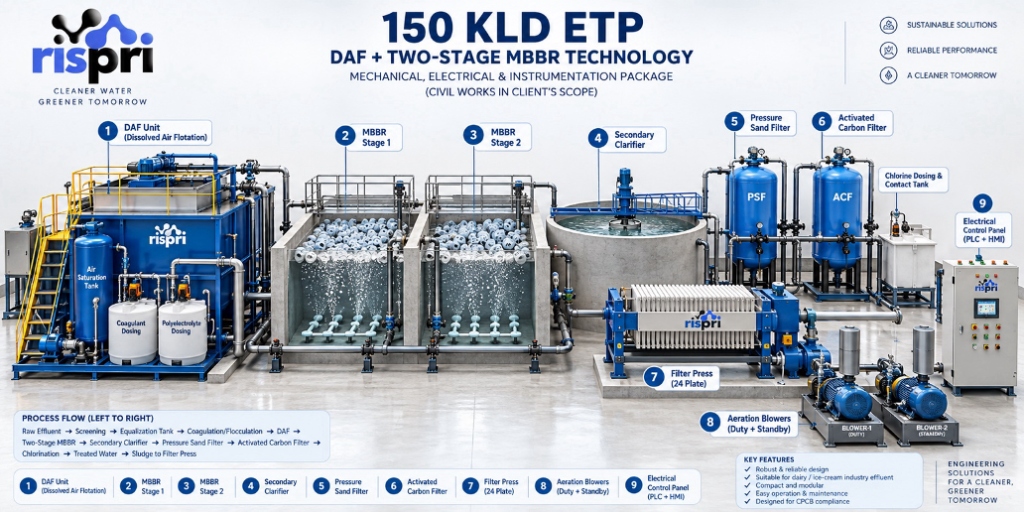
Image: Industrial Effluent Treatment Plant (ETP) Process Flow & DAF/MBBR Clarifier