
Geogenic contaminants threaten drinking water safety and complicate industrial process water treatment across 27 states.
In brief
Official data reveals fluoride contamination in isolated pockets across 469 districts and arsenic in 230 districts. Long - term exposure to these geogenic contaminants causes fluorosis and arsenicosis, making baseline laboratory testing and targeted removal technologies vital for both drinking water systems and industrial process feed.
Not every water contamination problem in India traces back to a factory outfall pipe. Fluoride and arsenic get into groundwater the slow way - leaching out of rock formations over decades - which makes them harder to blame on anyone, and just as dangerous to drink.
Districts and states most affected
According to Central Ground Water Board (CGWB) survey data, excess fluoride (exceeding BIS 10500 permissible limit of 1.5 mg/L) is detected in isolated pockets across 469 districts in 27 states - particularly in arid regions of Rajasthan, Telangana, Andhra Pradesh, Gujarat, Karnataka, and Tamil Nadu.
Arsenic contamination (exceeding 0.01 mg/L) is present in 230 districts across 25 states, concentrated heavily in the alluvial plains of the Ganga - Meghna - Brahmaputra basin in West Bengal, Bihar, Uttar Pradesh, Jharkhand, Assam, and Manipur.
Health effects and removal technologies
Chronic ingestion of high - fluoride water leads to dental fluorosis (mottled enamel) and crippling skeletal fluorosis. Arsenic ingestion causes severe skin lesions (keratosis), cardiovascular disorders, and elevated risk of skin, bladder, and lung cancers.
Effective removal relies on specific treatment chemistries: defluoridation utilizes activated alumina adsorption, Nalgonda coagulation - precipitation, or Reverse Osmosis (RO). Arsenic removal requires pre - oxidation (converting As(III) to As(V)) followed by iron - laterite adsorption or ion exchange resins.
For any facility drawing groundwater for boiler feed, food processing or employee drinking supply in one of these 469 or 230 affected districts, the fix isn't complicated in principle - defluoridation or dearsenification technology exists and works - but it starts with actually testing the source water rather than assuming municipal or borewell supply is automatically safe.
Why it matters
Groundwater used for boiler feed, food processing, or employee drinking supply in affected districts must undergo targeted defluoridation or dearsenification to avoid health risks and equipment fouling.
Found an error? See the Corrections Policy.
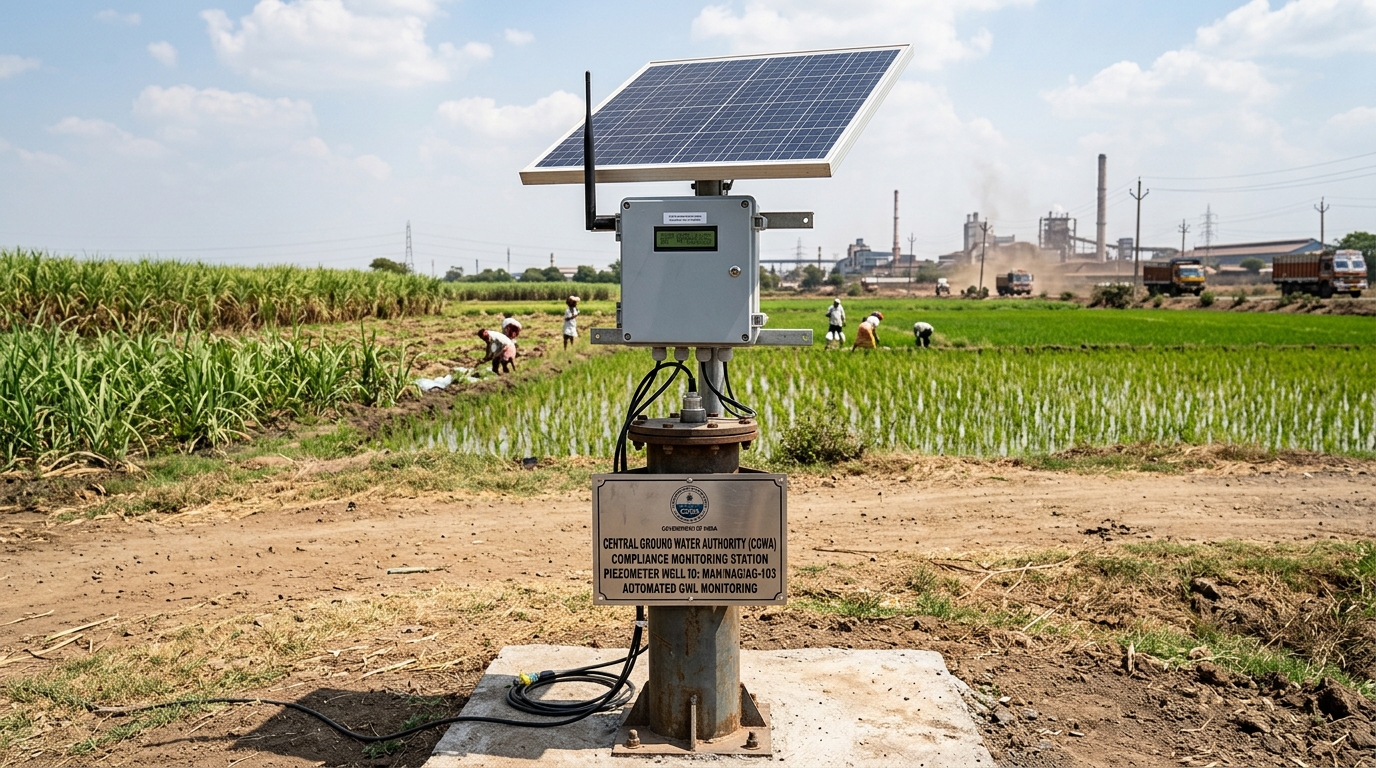
Image: Automated Digital Piezometer & Real-Time IoT Groundwater Monitoring Station