
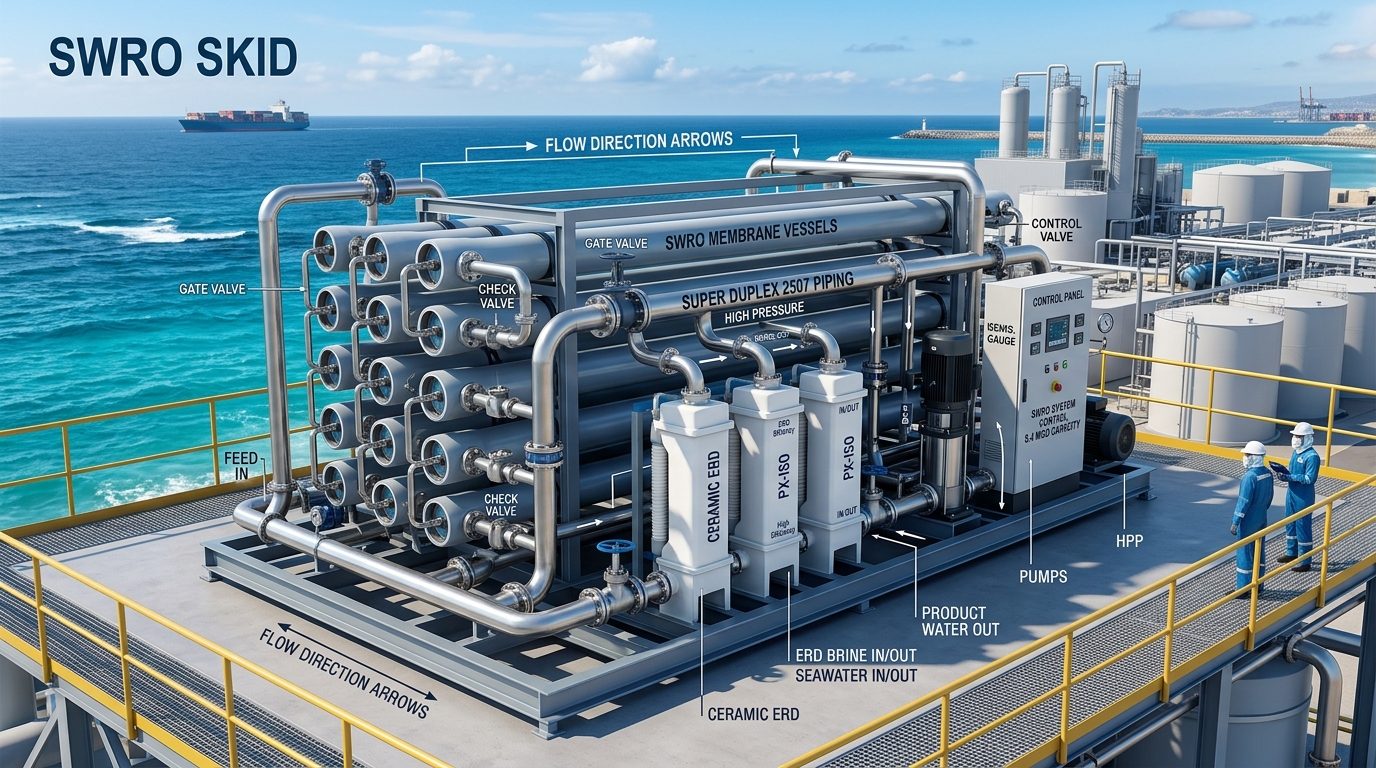
Engineered water - channel proteins integrated into polyamide membranes enable ultra - high hydraulic permeability at half the operating pressure of conventional SWRO membranes.
In brief
Commercial scale trials of biomimetic aquaporin - embedded membranes across industrial wastewater recycling plants have demonstrated a 45% reduction in specific energy consumption while maintaining >99.4% monovalent salt rejection. The technology incorporates natural cellular water transport proteins into thin - film composite polyamide layers.
Cells have been moving water through their membranes with near-zero energy loss for billions of years, using a specialised protein called an aquaporin. Industrial reverse osmosis is now, quite literally, borrowing that trick - and the energy numbers from commercial-scale trials are hard to ignore.
Replicating Cellular Water Transport
By embedding synthetic aquaporin protein structures into thin-film nanocomposite polyamide layers, membrane developers have built elements that move 2 to 3 times more water per bar of applied pressure than standard aromatic polyamide membranes - which matters, because pressure is where most of an RO plant's electricity bill comes from.
Fouling Resistance and Organic Protection
The smooth, hydrophilic aquaporin surface also happens to resist biofouling and organic scaling better than conventional membranes, roughly doubling the interval between Chemical-In-Place cleaning cycles and stretching membrane life from about 3 years to over 5 in demanding industrial effluent. With energy typically eating over 70% of an ETP's operating budget, a technology that cuts both the pressure requirement and the replacement frequency is worth watching closely as it moves from pilot plants to mainstream specification.
Why it matters
High electrical energy demand has long been the primary barrier to widespread industrial ZLD and brackish water recycling. Aquaporin - functionalized membranes allow existing high - pressure booster pumps to operate at significantly reduced feed pressures, delivering immediate operational cost savings for manufacturing facilities.
Sources
Journal of Membrane Science / International Water Association Tech ReviewRead original ↗Aquaporin A/S Commercial Performance Whitepaper↗Found an error? See the Corrections Policy.
Image: Seawater Reverse Osmosis (SWRO) Membrane Vessels & Isobaric Energy Recovery