
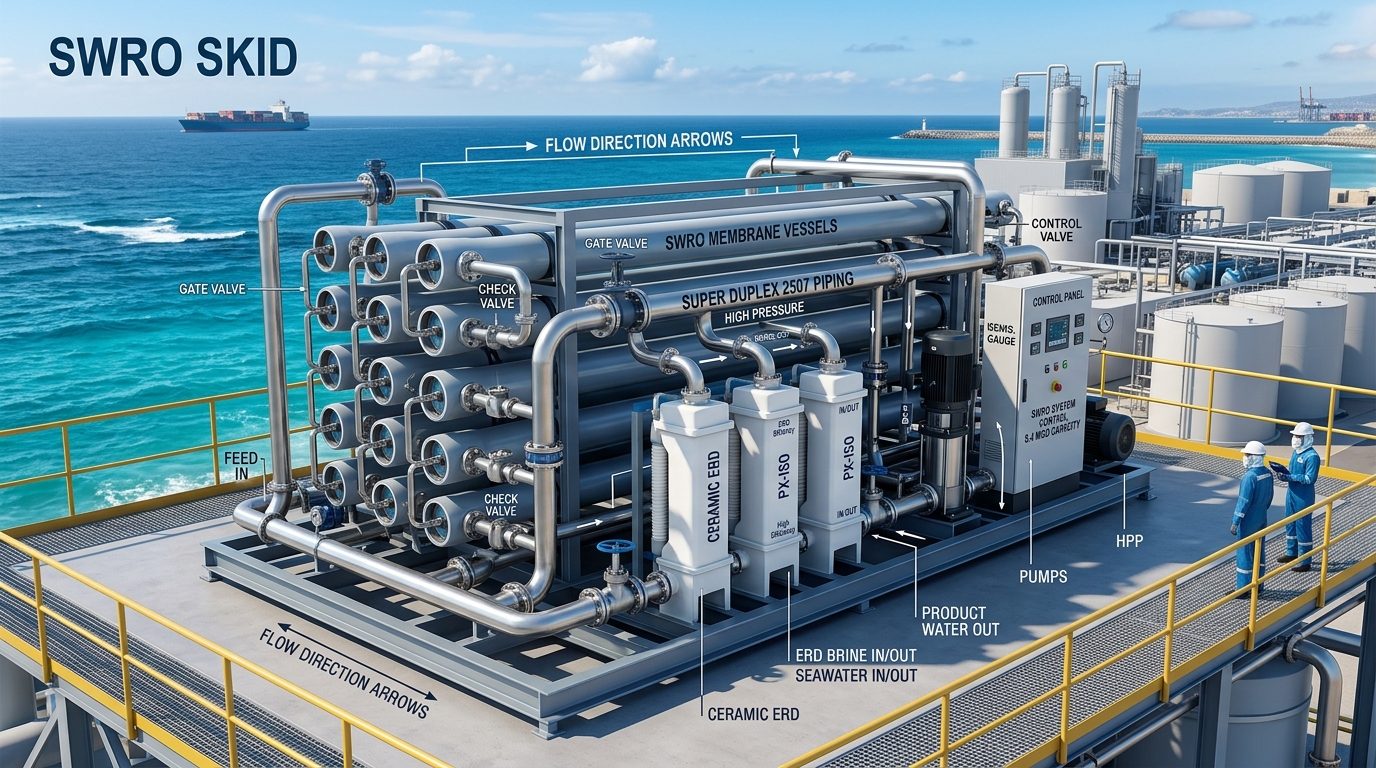
A massive microalgae bloom made the sea too murky to treat, exposing how vulnerable desalination is to what happens in the water it takes in.
In brief
In early September 2026 a huge microalgae bloom in the eastern Mediterranean forced five of Israel's six major seawater desalination plants to shut down: Ashkelon, Ashdod, Palmachim, Sorek A and Sorek B. Only Hadera kept running. Plants stopped when seawater turbidity went above safe limits for their filters and membranes.
What happened
A microalgae bloom first appeared off Egypt's coast on 6 July 2026. It reached Israeli waters in late August and early September. Five of Israel's six major desalination plants then shut down: Ashkelon, Ashdod, Palmachim, Sorek A and Sorek B. Only Hadera, farther north, kept running.
Why the plants had to stop
Plants halted when seawater turbidity rose above 5 NTU. Turbidity measures how cloudy water is, and NTU is its unit. Researchers explained that the microalgae release a gel-like substance that passes through conventional and sand filters and then builds up on the fine reverse osmosis membranes.
This is the key point for any desalination operator. The membranes were not the weak link. The pre-treatment in front of them could not handle this kind of algae.
Where the bloom came from
Researchers at the Israel Oceanographic and Limnological Research Institute suggest the bloom may have started in Egypt's Nile Delta and been carried east by currents. This is not yet confirmed by lab analysis. One professor quoted by Misbar said nutrient-rich wastewater from Gaza may have added fuel to the bloom.
How Israel coped
Authorities switched to groundwater reserves, suspended irrigation on about 20,000 dunams of farmland and cut water to southern farming areas. The institute's director called it an exceptional event with no precedent in the region's modern history.
What to take from it
Desalination is only as reliable as its intake water. Warm seas and nutrient pollution make blooms more likely. Plants in India and elsewhere should test their pre-treatment against high-turbidity, algae-laden seawater, not just normal conditions.
Why it matters
Coastal industries and cities that depend on desalination need a plan for bad seawater days, including stronger pre-treatment and backup supply.
Sources
Misbar: tracking the algae bloom behind Israel's desalination crisisRead original ↗CNN: Miles-long microalgae bloom knocks out most of Israel's desalination plants↗NBC News: Algae bloom exposes fragility of Israel's water system↗Found an error? See the Corrections Policy.
Image: Seawater Reverse Osmosis (SWRO) Membrane Vessels & Isobaric Energy Recovery