
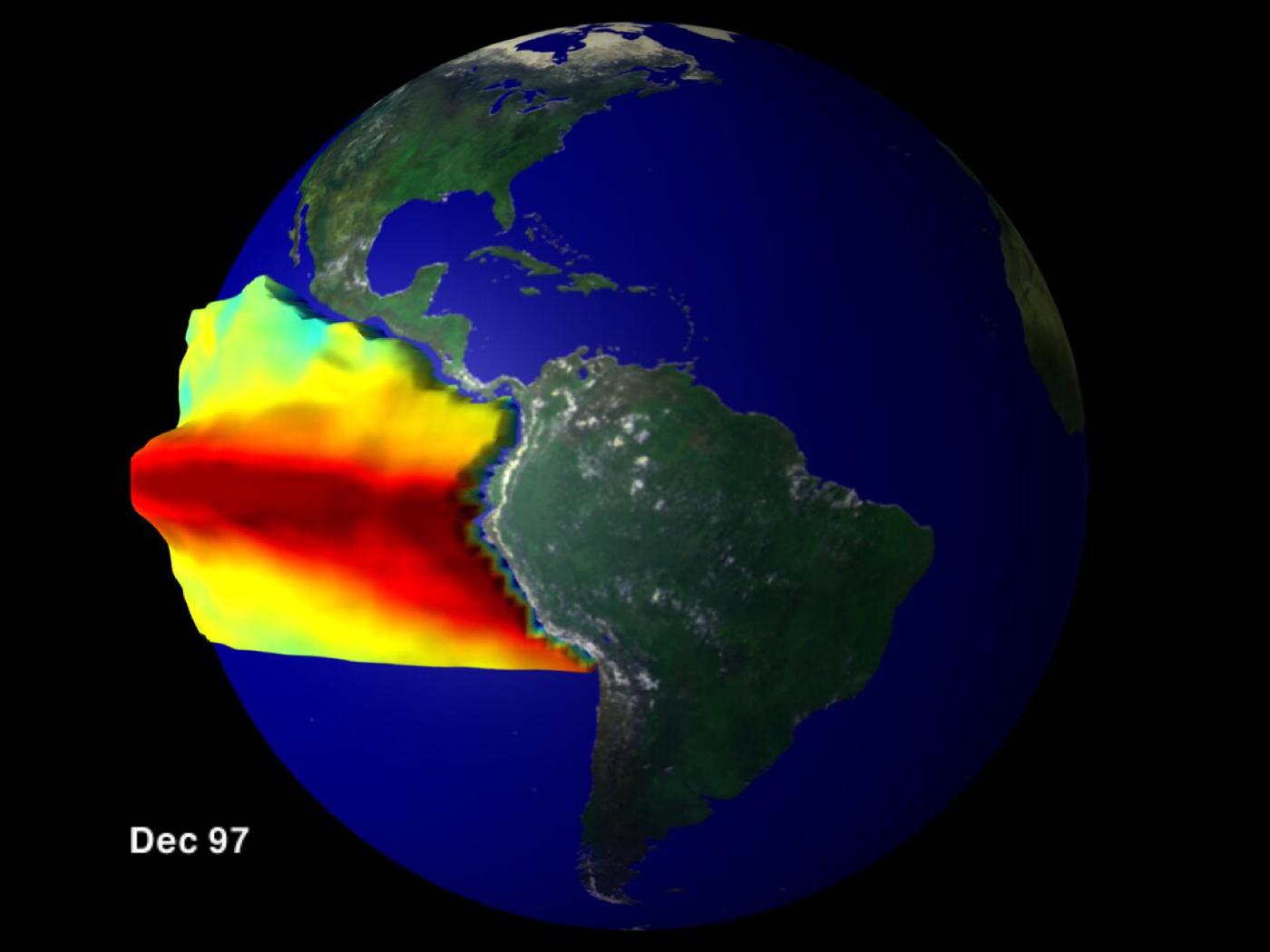
WMO forecasts a Niño 3.4 anomaly of about +3.8°C peaking in December, above the 2015–16 record. The IMD expects below-normal rain over most of India this winter after a 12.6% monsoon deficit.
In brief
The WMO's 21 October seasonal update forecasts a Niño 3.4 anomaly of about +3.8°C for November 2026–January 2027, which would exceed the previous record of +2.6°C. NOAA gives an 83% chance of a strong to very strong event. For India, the IMD expects below-normal October–December rain over most of the country, following a monsoon that ended 12.6% below normal.
Forecasting centres agree that the current El Niño is strengthening. The WMO's 21 October update, based on a 13-centre consensus, gives a near-100% likelihood that it persists through February 2027 and forecasts a Niño 3.4 anomaly of about +3.8°C for November–January, peaking around December. The previous WMO record was +2.6°C in late 2015, although WMO and NOAA use different baselines, so the numbers aren't directly comparable.
NOAA's Climate Prediction Center gives an 83% chance of a strong to very strong event through January–March 2027. Australia's Bureau of Meteorology recorded a relative Niño 3.4 of +2.81°C in the week to 11 October, its highest since 2008.
What it means for India
India's June–September monsoon ended at 759.4 mm against a long-term average of 868.6 mm, a 12.6% shortfall. For October–December, the IMD expects below-normal rain over most of the country, with normal or above-normal rain possible in parts of the north-west and southern peninsula. That matters most for Tamil Nadu and coastal Andhra Pradesh, which rely on the northeast monsoon and whose reservoirs are already very low.
Elsewhere
The SADC outlook favours below-normal rain across much of southern Africa into early 2027. PAGASA warned that the Philippines faces drought risk, and the Panama Canal Authority says the canal watershed's water deficit persists, with daily transits still restricted. Not every extreme is down to El Niño: Argentina's INA attributes current Paraná River flooding to local wet conditions and dam releases.
Why it matters
Strong El Niño years bring drier conditions to India, Southeast Asia and southern Africa. With Indian reservoirs already low, water utilities and industries should plan for tighter supply through summer 2027.
Sources
Smart Water Magazine: El Niño 2026–27: flood and drought signals by region (23 October 2026)Read original ↗NOAA Climate Prediction Center: ENSO diagnostic discussion↗World Meteorological Organization: Global Seasonal Climate Update↗India Meteorological Department↗Found an error? See the Corrections Policy.