
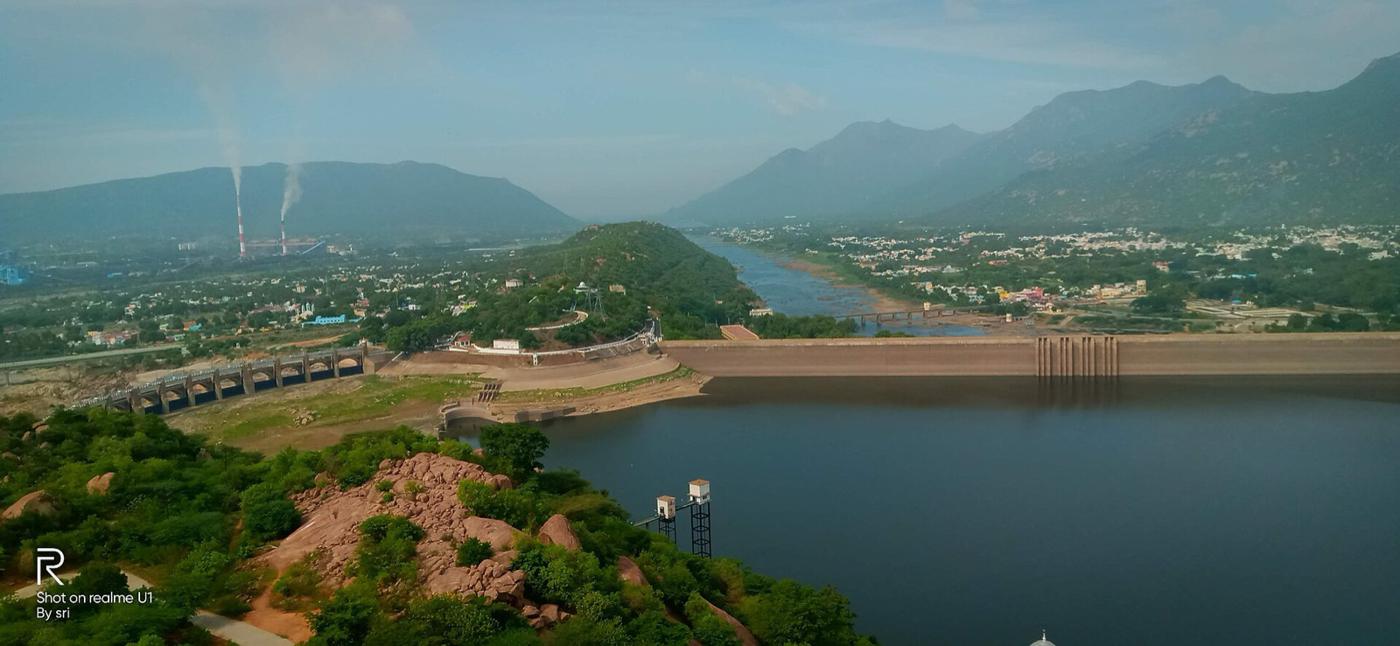
Central Water Commission data for 22 October shows southern reservoirs at less than half of last year's level after a weak monsoon, with Mettur, Vaigai and Marathwada's Manjra dam critically low.
In brief
Live storage in India's 178 major reservoirs fell from 126.7 to 123.2 billion cubic metres between 15 and 22 October 2026, dropping to 66.7% of capacity. The southern region is the worst affected: its 50 reservoirs are at 42.3%, against 89.4% a year ago and a ten-year average of 77.9%.
The Central Water Commission's weekly bulletin for 22 October shows combined live storage in India's 178 monitored reservoirs at 123.228 BCM, down from 126.717 BCM a week earlier, out of a total live capacity of 184.762 BCM. That is 66.70% full, down from 68.58% in seven days.
The south is the problem
Reservoirs across Andhra Pradesh, Karnataka, Kerala, Tamil Nadu and Telangana hold 23.659 BCM of 55.879 BCM capacity, 35.6 percentage points below the ten-year average for the date. In Tamil Nadu, Mettur is at 21.19%, Vaigai at 24.42% and Karaiyar at 12.75%, and Aliyar has no live storage left. Telangana's Nagarjuna Sagar is at 29.68%.
Elsewhere the picture is uneven. Maharashtra's 38 reservoirs are 80.4% full overall, but Marathwada is in a different position: Manjra is at 7.74% and Lower Dudhna at 15.97%, and the state has declared drought in parts of Maharashtra. In Gujarat, Sardar Sarovar is at 99.44% while Bhadar (17.78%) and Dantiwada (21.90%) are low. Madhya Pradesh's Omkareshwar (15.38%) and Rajasthan's Jawai (12.44%) are also well down.
Why the timing matters
India's June–September monsoon ended 12.6% below normal, according to the IMD, and a strong El Niño makes a below-normal northeast monsoon over most of the country more likely. With reservoirs normally at their fullest in October, a week-on-week fall of this size at the start of the dry season is an early warning for drinking water and industrial allocations through summer 2027.
Why it matters
Reservoirs normally peak after the monsoon. Starting the dry season this low means industrial water cuts and heavier groundwater pumping are likely in southern India and Marathwada over the next eight months.
Sources
Down To Earth: India's major reservoirs lose 3.49 billion cubic metres of water in a week, CWC data shows (23 October 2026)Read original ↗Central Water Commission: Reservoir storage bulletins↗Found an error? See the Corrections Policy.
Image: Sri2161k (CC BY-SA 4.0)