
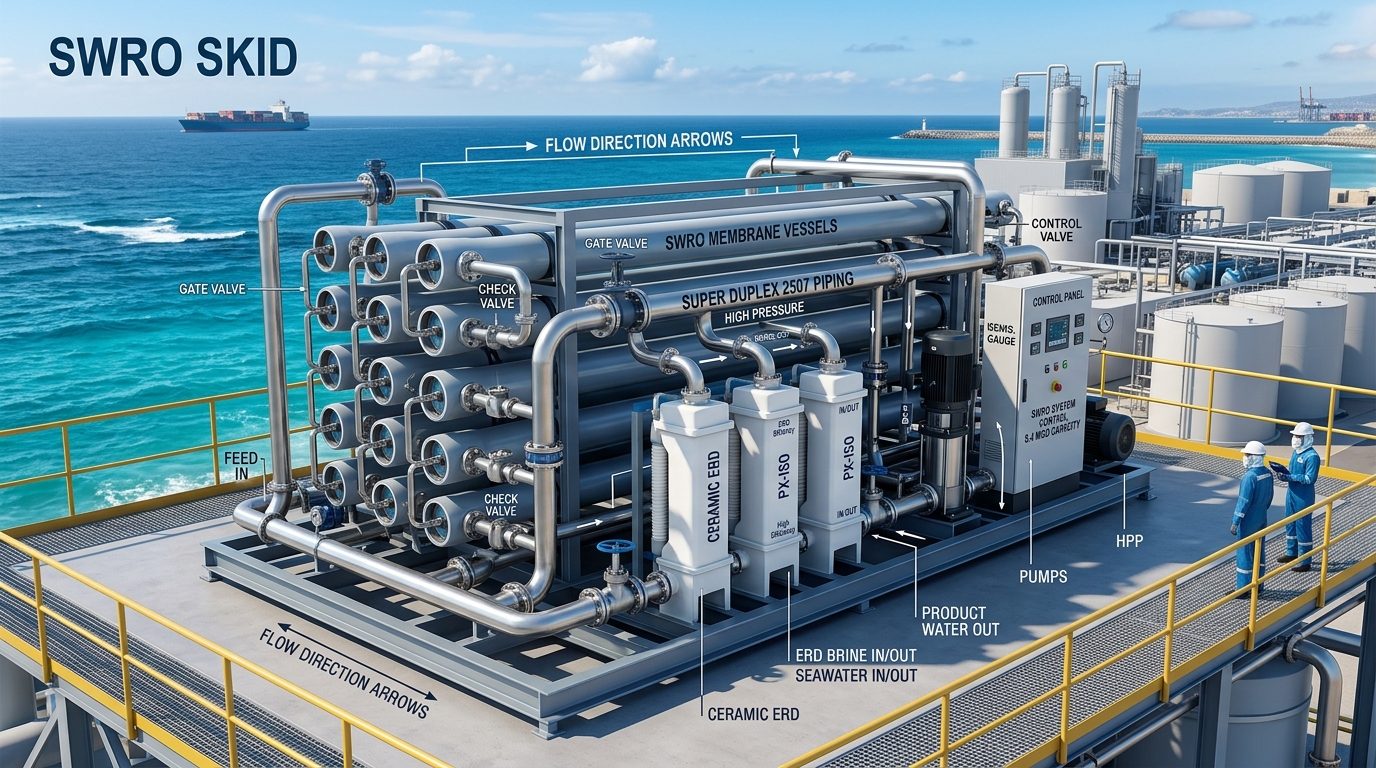
The single biggest recurring cost in desalination is energy - this is aimed straight at it.
In brief
Energy Recovery's March 2026 PX Q650 pressure exchanger reclaims hydraulic energy from concentrated brine at up to 99% peak efficiency, letting large seawater RO plants cut energy use by as much as 60% compared with plants running without energy recovery.
If there's one line item that decides whether a seawater desalination plant is economically viable, it's electricity - and the single most effective lever for cutting it doesn't touch the membrane at all.
What's new about the Q650
Energy Recovery launched the PX Q650 pressure exchanger on 9 March 2026, built for large - scale seawater desalination plants. It handles a flow capacity of 250 - 650 gallons per minute - 63% higher than its predecessor, the PX Q400 - at peak efficiency up to 99%, with volumetric mixing as low as 2%. That low - mixing figure matters as much as the efficiency number: it means very little of the outgoing product stream re - contaminates the incoming feed, which is the main quality metric these devices are judged on. The unit is rated for a 30 - year design life with no scheduled maintenance.
Why the warranty change matters as much as the spec sheet
Alongside the launch, Energy Recovery doubled its ceramic - component warranty to 10 years and its performance warranty to 4 years from shipment. For a device meant to run continuously under high pressure for decades, warranty length is itself a signal of how confident the manufacturer is in long - term reliability - not just a sales term.
The doubled ceramic-component warranty is arguably as telling as the efficiency numbers: a manufacturer that extends its warranty to 10 years on a component meant to run continuously for three decades is making a fairly public bet on its own reliability data, not just marketing a spec sheet.
Why it matters
Energy is typically the largest recurring operating cost in reverse osmosis desalination - a device claiming a 60% cut, even before counting the smaller device count and footprint, changes the economics of scaling RO rather than just the membrane chemistry.
Found an error? See the Corrections Policy.
Image: Seawater Reverse Osmosis (SWRO) Membrane Vessels & Isobaric Energy Recovery