
Published in Chemical Engineering Journal (Aug 25, 2026), the single-stage electrochemical reactor removes 98.2% arsenate and 91.8% fluoride from groundwater at ₹18–58 per 1,000 liters.
In brief
On August 25, 2026, researchers at IIT Guwahati led by Prof. Mihir K. Purkait unveiled a rotating-anode electrocoagulation (RA-EC) reactor capable of simultaneously neutralizing co-existing arsenic and fluoride contaminants. The single-step process overcomes historical chemical interference limitations, operating at a fraction of conventional reverse osmosis costs.
Groundwater contamination by inorganic heavy metals and metalloids remains one of South Asia's most severe environmental health hazards. In many hydrogeological belts—particularly across the Gangetic plains and hard-rock aquifers—arsenic and fluoride co-occur, creating a complex remediation challenge because arsenate and fluoride ions compete for adsorption sites during traditional chemical precipitation.
The Breakthrough: Rotating-Anode Electrocoagulation (RA-EC)
Published in the Chemical Engineering Journal on August 25, 2026, the IIT Guwahati research team—headed by Prof. Mihir K. Purkait and doctoral scholar Mukesh Bharti—engineered a novel continuous-flow reactor utilizing a rotating aluminum-iron anode. By continuously shearing the anode surface during electrolytic oxidation, the system prevents passivation and maximizes active in-situ flocs of aluminum and iron hydroxides.
Unmatched Cost Economics & Operational Efficiency
Conventional treatment trains for dual arsenic-fluoride removal require pre-oxidation, ferric coagulation, microfiltration, and specialized ion exchange or RO polishers, pushing capital and energy overhead beyond the reach of rural community schemes. The RA-EC system drastically slashes both power consumption and chemical reagent footprint.
The technology is designed for modular deployment—ranging from 5 KLD community drinking water kiosks to large-scale municipal pretreatment units ahead of membrane filtration grids.
Why it matters
Over 300 districts across India face dual arsenic-fluoride groundwater toxicity. Traditional treatment requires separate, expensive multi-stage precipitation and membrane filtration systems; this low-cost electrochemical innovation offers a scalable blueprint for decentralized rural drinking water plants.
Sources
Chemical Engineering Journal & ANI News (August 25, 2026)Read original ↗IIT Guwahati Department of Chemical Engineering Press Docket↗Rispri Labs Heavy Metal & Inorganic Water Quality Testing Services↗Found an error? See the Corrections Policy.
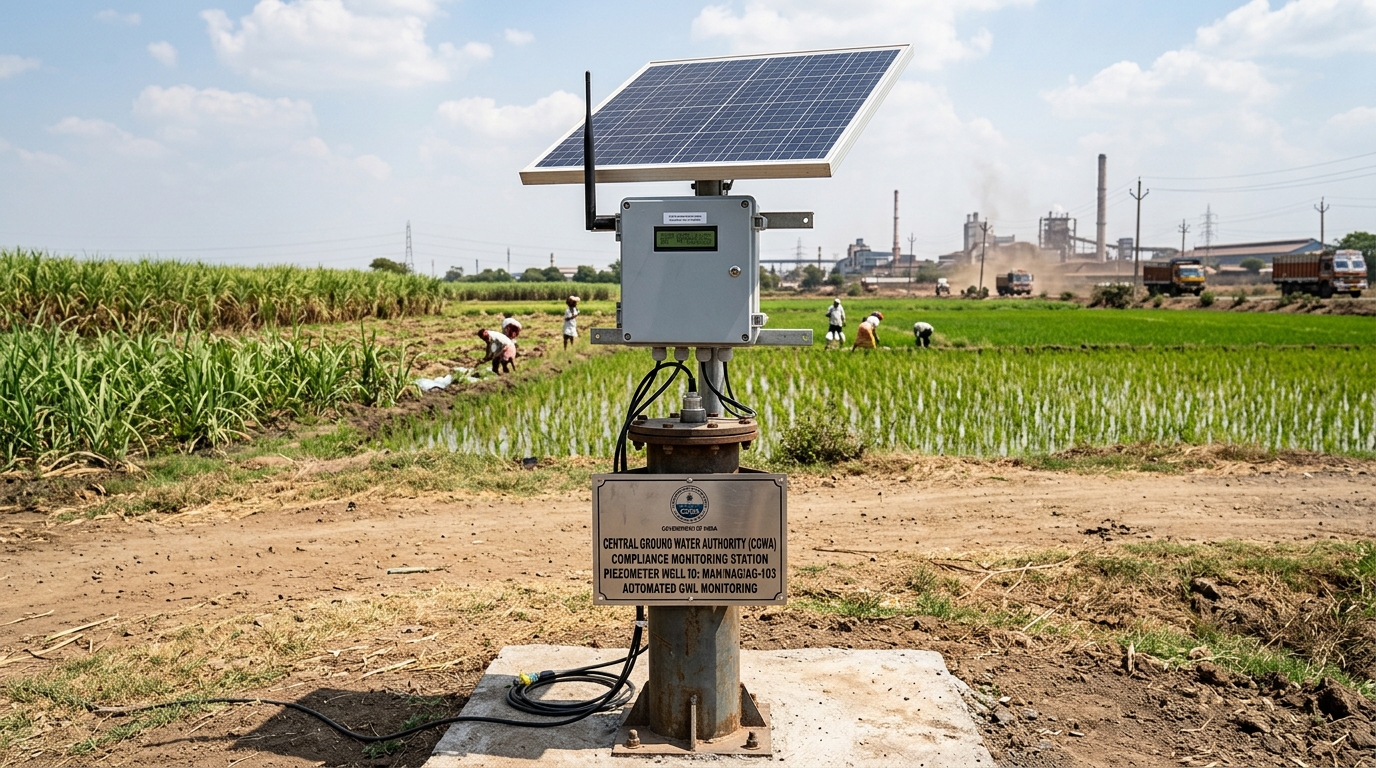
Image: Automated Digital Piezometer & Real-Time IoT Groundwater Monitoring Station