
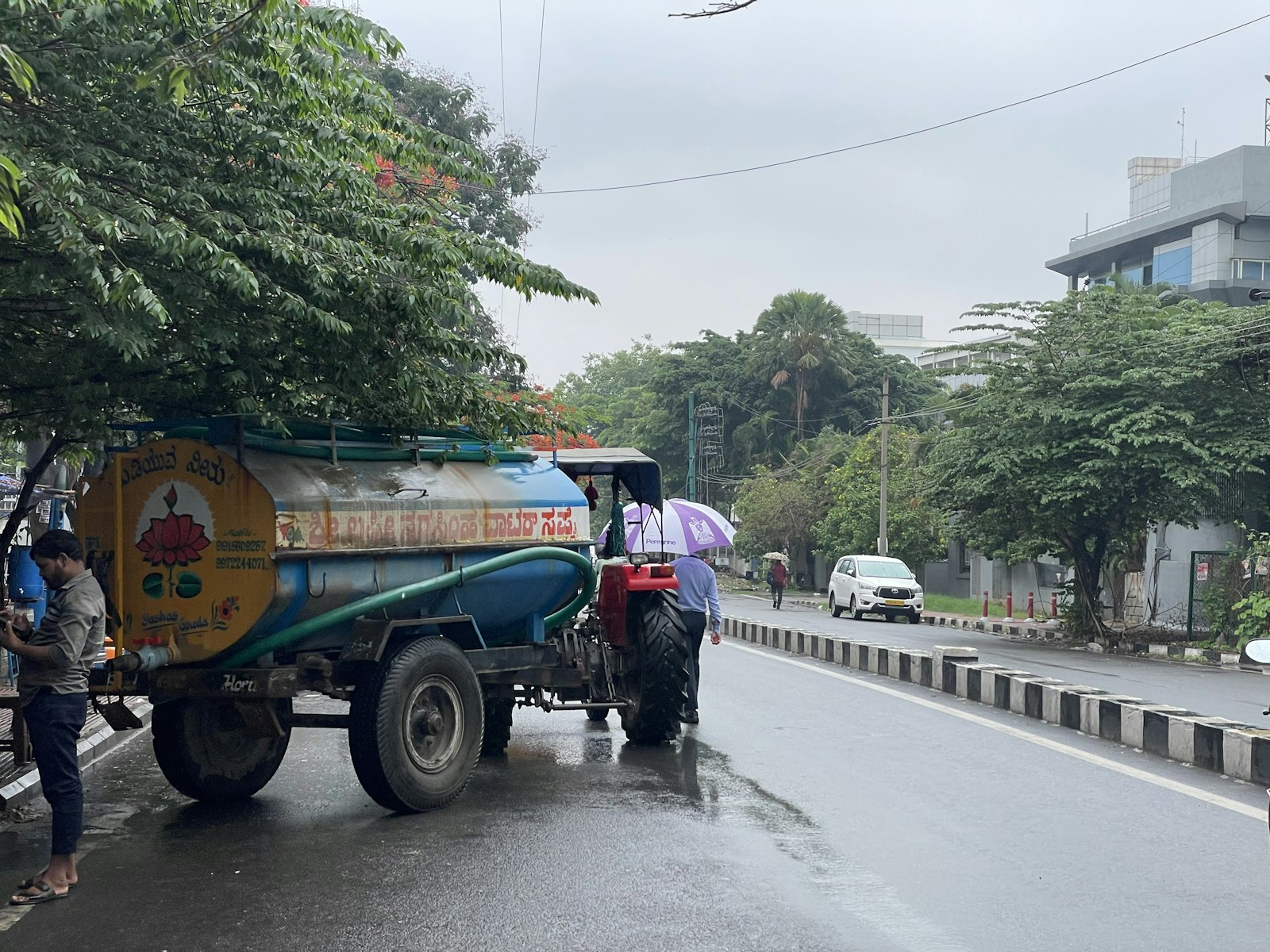
Tankers serve 353 villages and 233 hamlets, up from 295 tankers at the end of September, and 917 private wells have been taken over.
In brief
Marathwada is using 560 tankers to supply drinking water to 353 villages and 233 hamlets, according to figures from the divisional commissioner's office reported by Pudhari and Sakal. Only five of the tankers are government-owned. At the end of September the region had 295 tankers serving 157 villages and 103 hamlets.
Marathwada has moved to tanker water months before summer. Pudhari reported on 7 November 2026 that 560 tankers were supplying 353 villages and 233 hamlets at the start of the month. Sakal reported the same totals the same day, citing data released by the divisional commissioner's office.
Nearly double in about five weeks
At the end of September, Pudhari reports, the region had 295 tankers serving 157 villages and 103 hamlets. The reports differ on the most recent pace. Pudhari says 119 tankers were added in 17 days. Sakal says the count was 473 on 21 October, which would mean 87 added in about 18 days. Both agree on the current total.
Pudhari attributes the early shortage to rainfall about 38% below normal, with rain slowing after July and local sources drying up. It links the deficit to El Nino.
Where the tankers are going
Beed has the largest share, with 294 tankers serving 172 villages and 183 hamlets in Pudhari's table (Sakal gives 292). Chhatrapati Sambhajinagar has 179 tankers for 119 villages and 34 hamlets. Jalna has 68 tankers for 49 villages and 16 hamlets, and Dharashiv has 19 tankers for 13 villages. Pudhari lists no tanker figures for Latur, Parbhani, Hingoli or Nanded.
Officials have also taken over 917 private wells. The largest numbers are in Dharashiv (344) and Latur (302), followed by Beed (103), Jalna (75), Chhatrapati Sambhajinagar (74) and Parbhani (19). This suggests that districts with few tankers may be leaning on wells instead, although the reports do not say so directly.
Part of a wider set of restrictions
Down To Earth reported in October that 265 of Maharashtra's 358 talukas had been declared drought-affected in September, and that the state had ordered local bodies to cut supply by at least 10%. In Chhatrapati Sambhajinagar, the same report said, industries were told to reuse 30% of the water they consume and sewage treatment plants were told to run at full capacity. Those rules matter more as tanker numbers rise, because every litre reused is a litre that does not have to be carried by road.
Why it matters
The dry months have barely begun and the region already relies almost entirely on private tankers. Towns and industries in drought districts should expect tighter water rules, and treated wastewater becomes one of the few sources that does not depend on rain.
Sources
Pudhari: Marathwada Water Shortage, tanker supply reaches 353 villages (7 November 2026)Read original ↗Sakal: Marathwada water crisis, 560 tankers and 917 wells (7 November 2026)↗Down To Earth: Weekly water cuts, borewell ban as Maharashtra tightens restrictions (13 October 2026)↗Found an error? See the Corrections Policy.
Image: Bernd Dittrich / Unsplash