
A petition asks the NGT to require tethered caps on drink bottles. Hindustan Unilever says it is a policy matter for the government.
In brief
The National Green Tribunal (NGT) is hearing a petition, Aakash Ranison vs CPCB & Ors (OA 137 of 2026), which argues that loose plastic caps on drink bottles escape collection and pollute the environment. On 20 February 2026 the tribunal issued notices to the CPCB and major beverage companies. In a reply dated 1 September 2026, Hindustan Unilever argued the tribunal should not order tethered caps.
What the case is about
The applicant told the NGT that plastic bottles are usually collected for recycling, but their detachable caps are not. Loose caps end up as litter and pollution. In some other countries the cap stays attached to the bottle after opening, so both are collected together. These are called tethered caps.
On 20 February 2026 the tribunal issued notices to the Central Pollution Control Board (CPCB), Coca-Cola India, Bisleri International, Hindustan Unilever, PepsiCo India Holding and others.
What Hindustan Unilever argued
In a reply dated 1 September 2026, Hindustan Unilever (HUL) asked to be removed from the case. It argued the application does not meet the legal threshold for the NGT to act, and that making tethered caps compulsory is a policy decision for the government, not the courts.
HUL said bottles and caps already fall under "Category I: Rigid Plastic Packaging" in the Plastic Waste Management Rules. Producers must already meet extended producer responsibility (EPR) targets for them. EPR makes companies responsible for collecting and recycling the packaging they sell.
HUL also said tethered designs could use more plastic per unit, and that their environmental benefit has not been properly assessed. It pointed out that the Ministry of Environment, Forest and Climate Change is not a party to the case.
What to watch next
No final order has been reported. The key questions are whether the tribunal treats tethered caps as a matter for courts or for the ministry, and whether the ministry is brought into the case.
Why it matters
If the tribunal requires tethered caps, bottlers and packaged water brands would need to redesign packaging. The case also tests how far India's plastic EPR rules already cover caps.
Sources
Down To Earth: Daily court digest, 20 February 2026Read original ↗India CSR: HUL seeks dismissal from NGT tethered caps case↗Found an error? See the Corrections Policy.
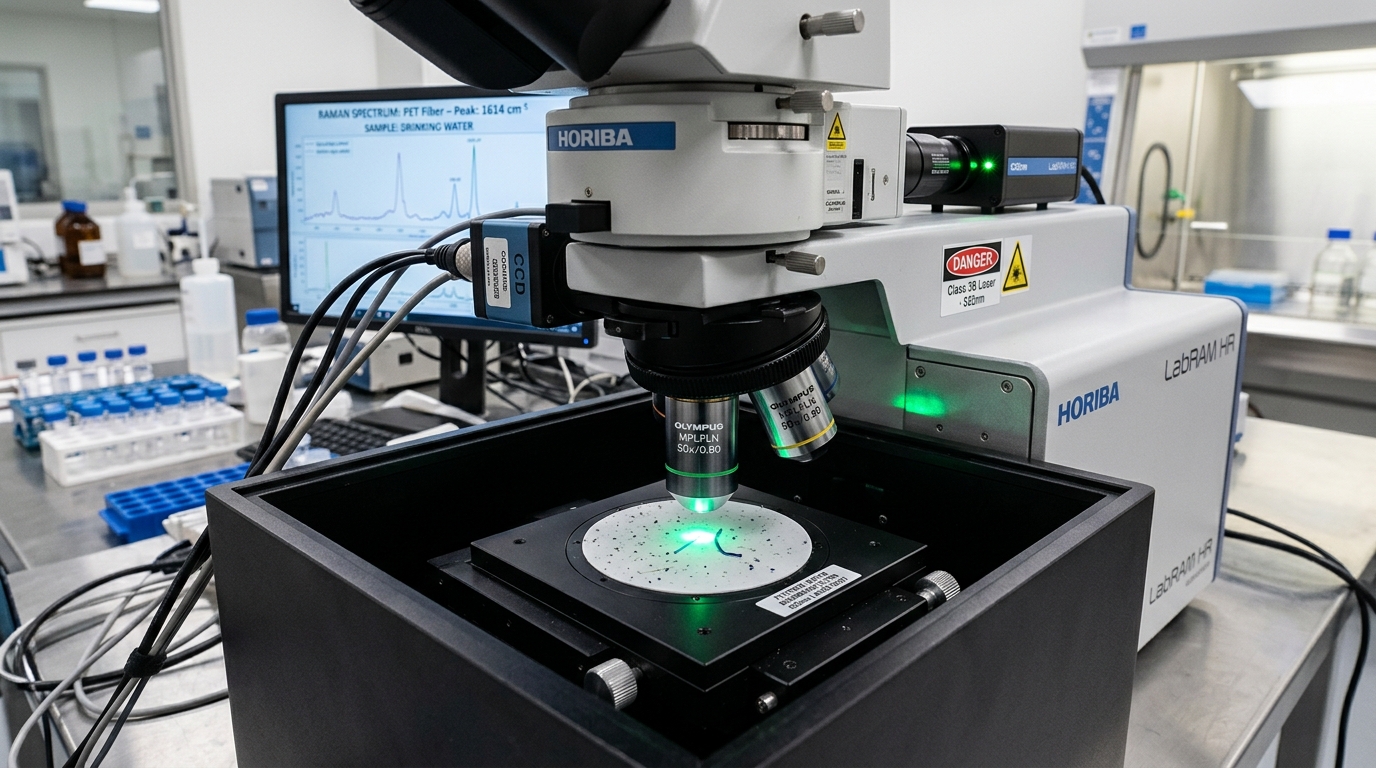
Image: Laser Spectroscopy (FTIR/Raman) Microplastic Particle Identification in Water