
Two invisible contaminants, one growing analytical challenge.
In brief
Advances in high - resolution spectroscopy and non - target screening are letting labs identify PFAS compounds and microplastic particles in the same wastewater sample, as regulators in the EU and US move toward mandatory monitoring for both in 2026.
PFAS and microplastics are chemically unrelated, but they've ended up sharing an analytical problem: both are present at vanishingly small concentrations, both require specialised instrumentation to see at all, and both are moving toward mandatory monitoring on roughly the same regulatory timeline.
How PFAS is actually detected
Liquid chromatography - tandem mass spectrometry (LC - MS/MS) remains the gold standard for measuring PFAS in water and wastewater. The harder problem is the PFAS compounds nobody's specifically looking for - which is where high - resolution mass spectrometry - based non - target and suspect screening comes in, using mass - defect - informed data acquisition to flag structurally related, low - abundance fluorinated chemistries that a targeted method would simply miss.
Microplastics: a different toolkit, the same trend
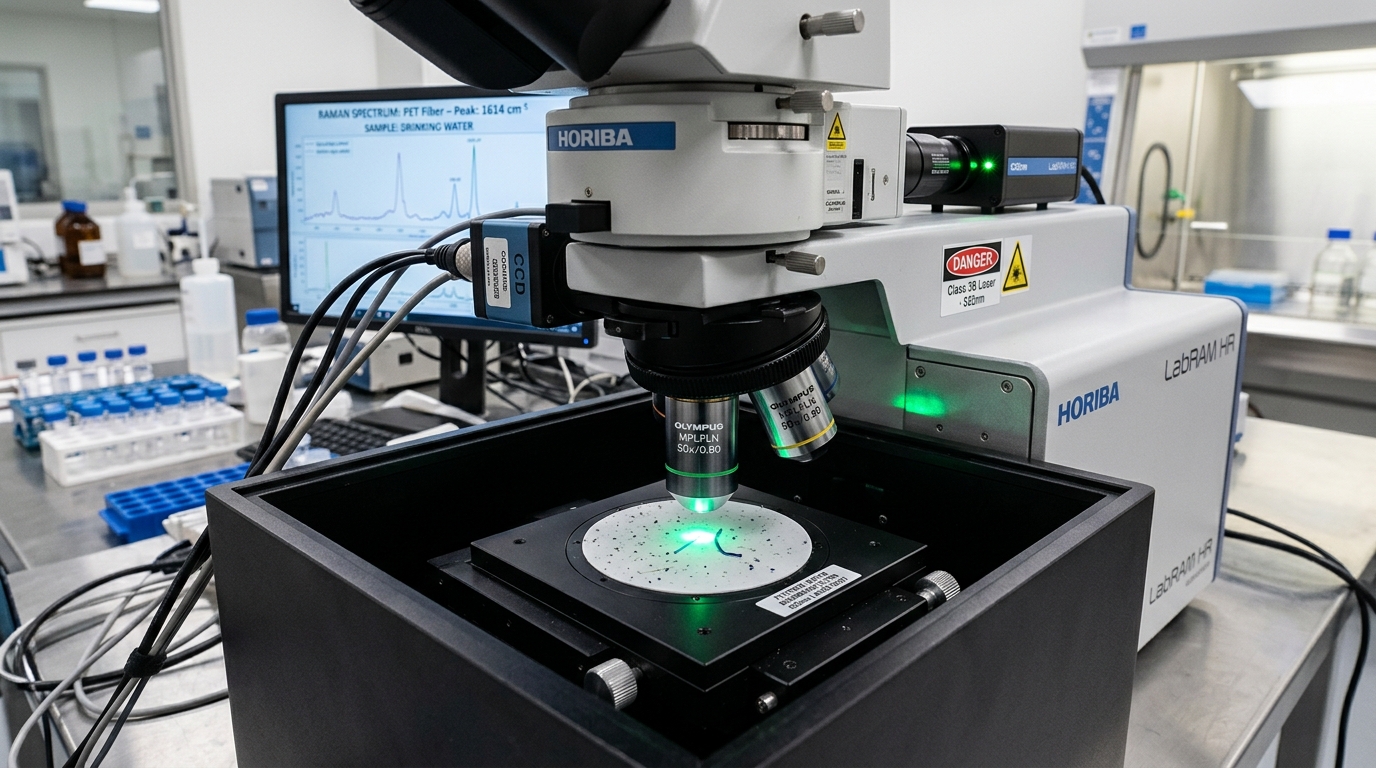
Microplastic detection leans on particle - resolved vibrational spectroscopy - µ - FTIR and µ - Raman - often benchmarked against thermal analysis methods like pyrolysis - GC - MS. These techniques identify not just that plastic particles are present, but what polymer they are, which matters for tracing contamination back to a source.
Neither PFAS nor microplastic testing is currently mandated in India. But as EU and US buyers push monitoring requirements down their supply chains, exporters are increasingly asked for this data voluntarily - meaning the capability is becoming a commercial requirement before it's a regulatory one.
Neither PFAS nor microplastics testing is mandated in India today, which means the honest driver behind adoption right now isn't domestic regulation - it's supply-chain pressure from EU and US buyers asking for this data before it's legally required. Worth tracking which comes first for Indian facilities: the export requirement or the domestic mandate.
Why it matters
India doesn't yet mandate PFAS or microplastic testing, but industrial buyers exporting to PFAS - regulated markets are starting to ask their suppliers for this data voluntarily - it's worth watching even ahead of local regulation.
Found an error? See the Corrections Policy.
Image: Laser Spectroscopy (FTIR/Raman) Microplastic Particle Identification in Water