
Rooftop harvesting just moved from nice - to - have to building code.
In brief
Updated Model Building Bye - Laws require rooftop rainwater harvesting as standard, and industries are expected to implement artificial groundwater recharge measures or pay a Water Conservation Fee to the state government in lieu of doing so.
The significant shift isn't that rainwater harvesting is being encouraged - India has had RWH guidance for years. It's that the updated Model Building Bye-Laws fold RWH structures, including underground collection tanks, directly into the base construction-permit framework. It's no longer a sustainability add-on evaluated separately; it's part of what makes a building plan approvable at all.
The trigger varies sharply by state
Delhi's rule is roof - area based: any building exceeding 100 square metres of roof area must incorporate a rainwater harvesting system. Tamil Nadu takes a different axis entirely, triggering the requirement by building height - all structures of three storeys or more need RWH regardless of footprint. Himachal Pradesh goes furthest: RWH is mandatory for all new urban buildings, full stop, and no building plan can be approved without one.
The industrial - specific angle: recharge or pay
For industries specifically, the obligation has a second track. Where a facility can't implement artificial groundwater recharge measures on - site, the alternative is paying a Water Conservation Fee to the state government - meaning this isn't purely a design requirement, it's a recurring cost line if the physical recharge infrastructure isn't built.
For any new industrial construction, that makes RWH a decision to make at the design stage, not a retrofit to consider once the building's up: doing it structurally (recharge pits, harvesting tanks) is typically cheaper once than paying the conservation fee indefinitely.
The "recharge or pay" framing is the part worth internalising at the design stage: paying a Water Conservation Fee indefinitely is almost always the more expensive path over a building's lifetime compared with building recharge pits and harvesting tanks once, upfront - which makes this a rare compliance requirement where doing the structural version is also the cheaper version.
Why it matters
This turns rainwater harvesting from a sustainability nice - to - have into a line item every new industrial building project needs to budget and design for from day one.
Found an error? See the Corrections Policy.
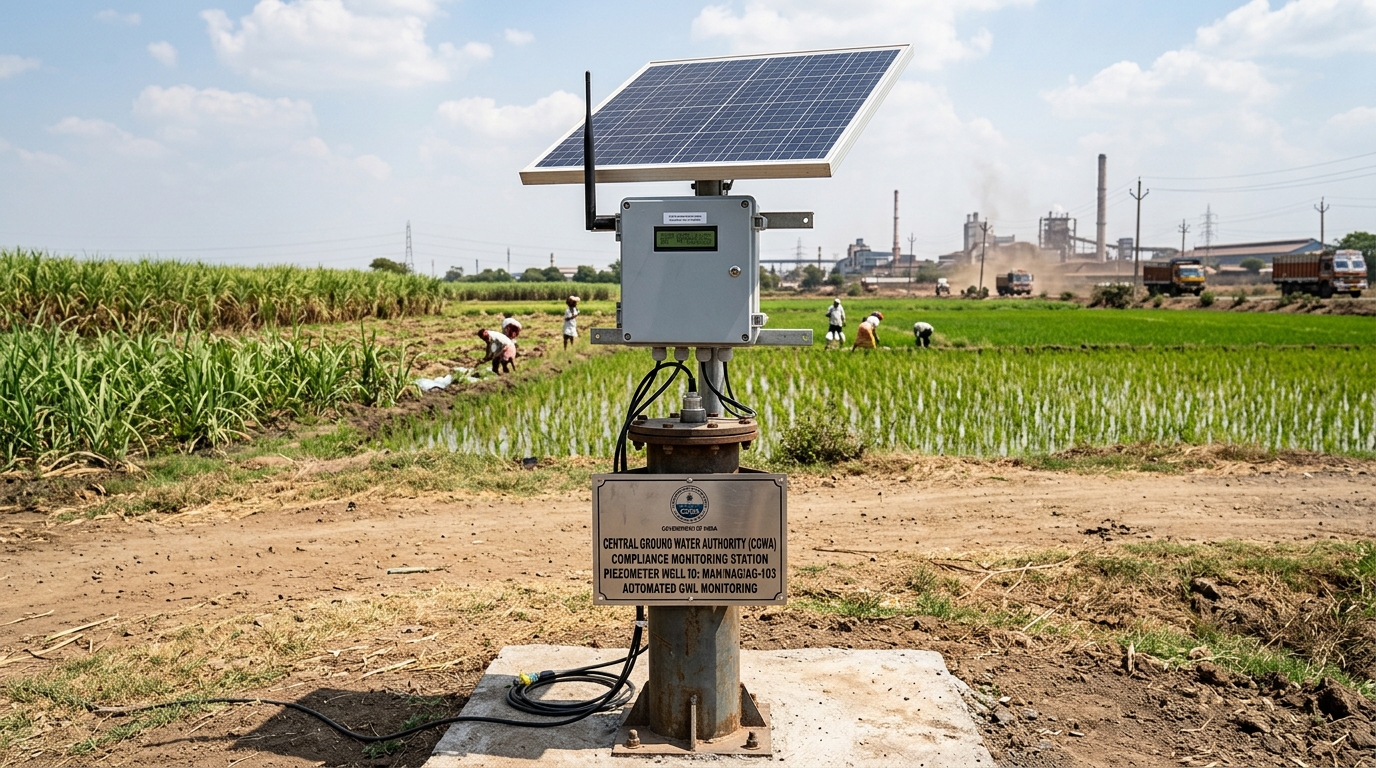
Image: Automated Digital Piezometer & Real-Time IoT Groundwater Monitoring Station