
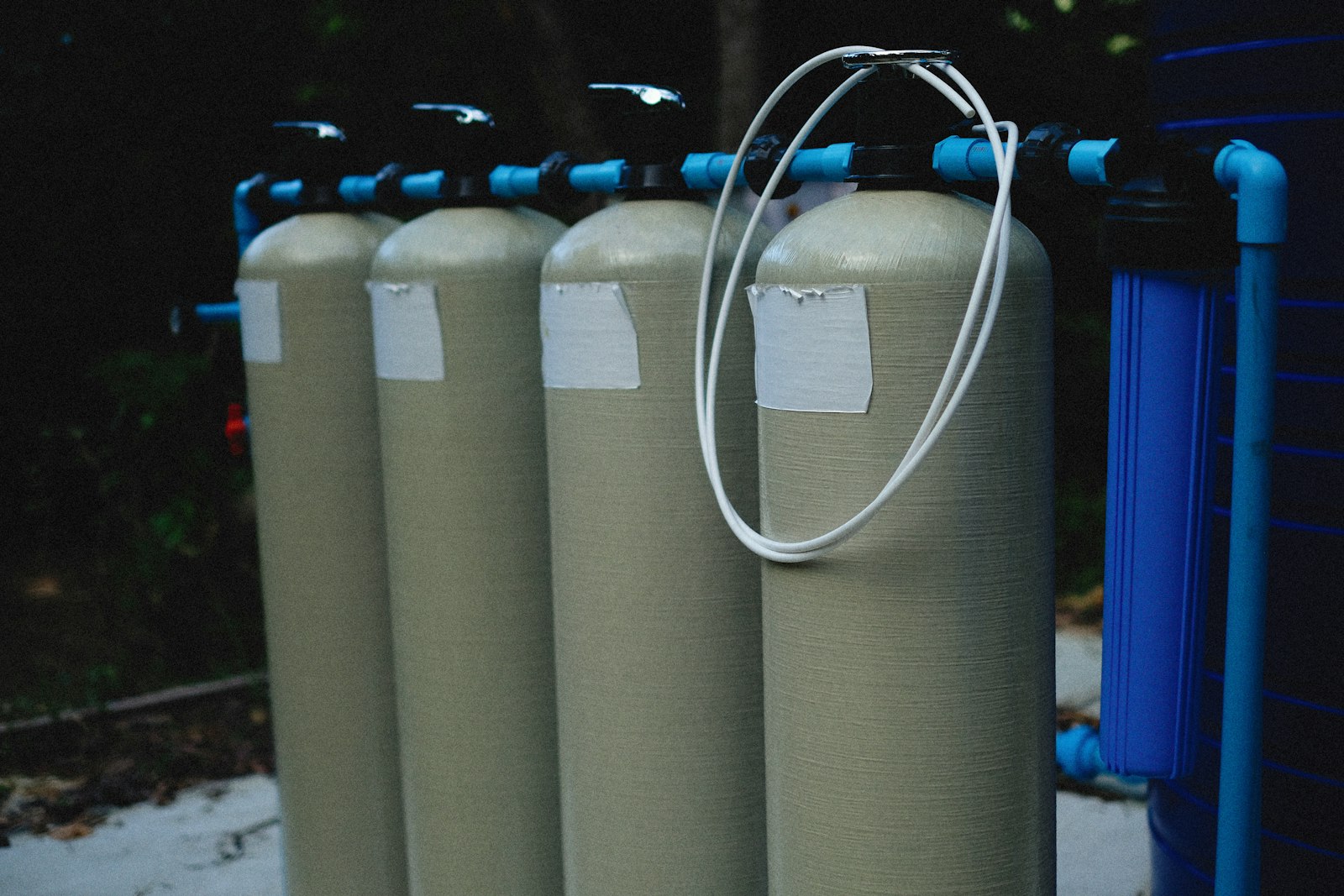
Sharjah's plant would serve about 1.4 million people, and with a contract in Oman the awards are worth nearly EUR 200 million.
In brief
Veolia announced on 5 November 2026 that it had won two Middle East desalination contracts worth nearly EUR 200 million. One is a design contract for the 410,000 m3/day Al Hamriyah plant in Sharjah, where Veolia expects energy use of 2.75 kWh per cubic metre. The other is a five-year contract to operate the 80,000 m3/day Al Asilah plant in Oman.
Veolia has won the design contract for the Al Hamriyah desalination plant in Sharjah, which is planned to produce 410,000 cubic metres of drinking water a day for about 1.4 million people. The company announced the award on 5 November 2026, alongside a five-year contract for a plant in Oman. Together the two are worth nearly EUR 200 million and cover 490,000 cubic metres a day.
What Veolia will supply
At Al Hamriyah, Veolia is supplying technology for the stages around the reverse osmosis membranes. Pretreatment uses dissolved air flotation and dual-media pressure filters, and remineralisation uses limestone filters. ACWA Power is the developer, under a 2024 agreement with the Sharjah Electricity, Water and Gas Authority (SEWA) to design, build, own, operate and maintain the plant. Smart Water Magazine reports ACWA's timeline as about 272,000 cubic metres a day by the second quarter of 2027 and the full capacity by the second quarter of 2028.
The Oman contract
In Oman, Veolia will operate and optimise the 80,000 cubic metre a day Al Asilah plant, which serves 200,000 people, for five years. The plant has a solar farm, and Veolia says it will use digital tools to optimise electricity use. Smart Water Magazine reports that the work will run through Bahwan Veolia Water, a partnership with Bahwan Engineering Company.
How to read the numbers
Veolia says desalination energy use has fallen 80% since the 1980s, and that the cost of producing a cubic metre has fallen 90%. It says it has built 18% of the world's installed capacity, operates 1.4 million cubic metres a day, and aims to double that by 2030. These are company figures from a press release. The 2.75 kWh figure in particular is what Veolia expects, and it should be checked against real performance once the plant is running.
The figure matters for India because large plants are moving ahead here too. Mumbai's civic body has cleared a Rs 2,241 crore contract for Manori, and Chennai Metro Water has invited consultants for a 400 million litre a day plant at Minjur. Energy is a major running cost for seawater plants, so a proven low figure would be a useful benchmark for projects like these.
Why it matters
Energy is usually the deciding cost in seawater desalination. Mumbai and Chennai are both moving ahead with large plants, so a claimed figure of 2.75 kWh per cubic metre is a useful number to compare their designs against, once it is proven in operation.
Sources
Veolia press release: Desalination, Veolia strengthens its position as global leader with major contracts in the Middle East (5 November 2026)Read original ↗Smart Water Magazine: Veolia wins design contract for 410,000 m3/day Al Hamriyah plant in Sharjah (6 November 2026)↗ACWA Power and SEWA agreement for Sharjah's first independent water project (September 2024)↗Found an error? See the Corrections Policy.
Image: Alexey Demidov / Unsplash