
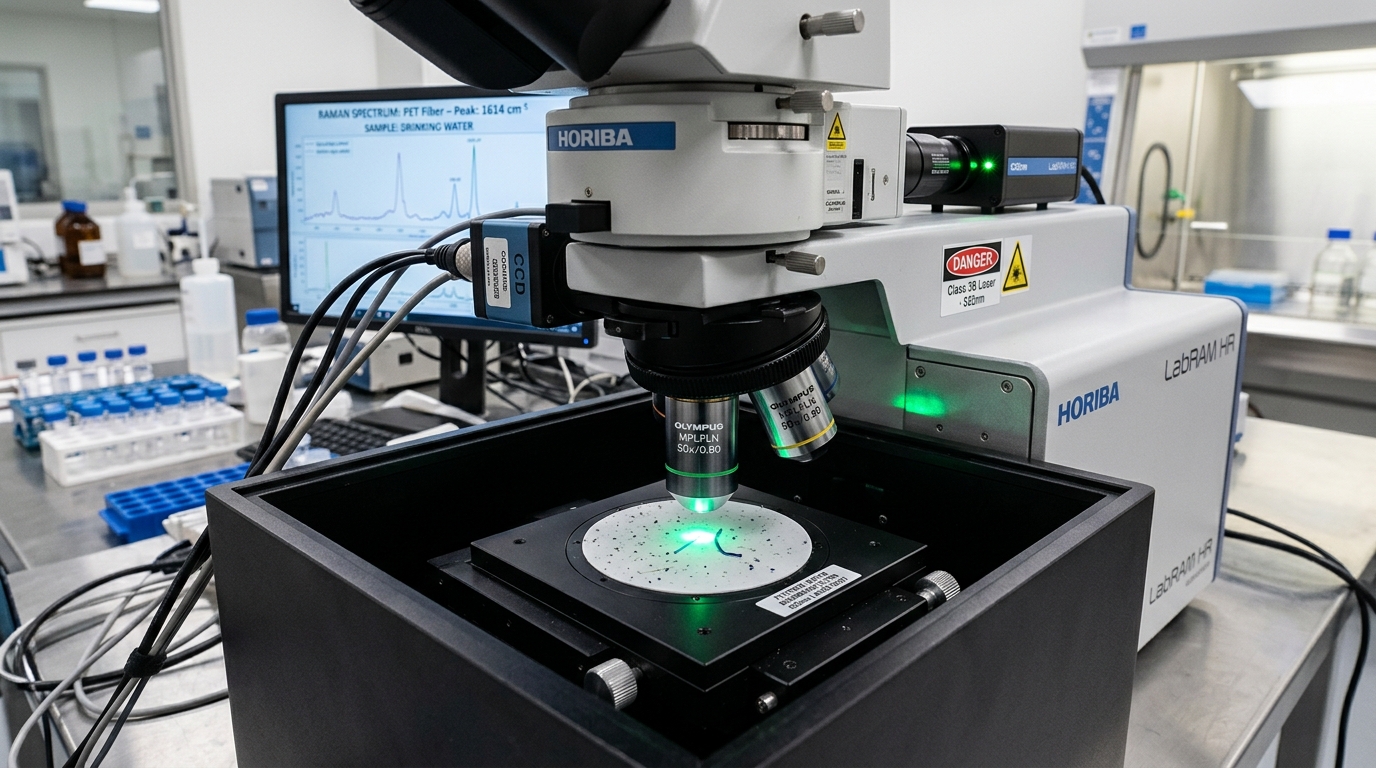
Laser Direct Infrared (LDIR) and Raman spectroscopy testing across major public water systems identifies synthetic textile microfibers and fragmented tire elastomers as primary particulates.
In brief
On October 10, 2026, the California State Water Resources Control Board released the inaugural annual findings from the world's first mandated municipal microplastics testing program (enacted under Senate Bill 1422). Utilizing standardized LDIR and Raman spectroscopic protocols, the audit found an average of 1.4 microplastic particles per liter across finished drinking water supplies, confirming that multi-stage filtration removes over 99% of raw source plastic debris.
California became the first jurisdiction worldwide to mandate routine testing of municipal drinking water for microplastics under landmark legislation Senate Bill 1422. The state water board's newly published year-one audit represents the most rigorous spectroscopic dataset on human drinking water exposure ever assembled.
Harmonized LDIR and Micro-Raman Protocols
Testing laboratories utilized the state's harmonized SOPs (SWB-MP1 and SWB-MP2). Water samples underwent enzymatic digestion to eliminate natural organic debris, followed by filtration onto silicon filter membranes for automated chemical identification using Laser Direct Infrared (LDIR) and confocal micro-Raman spectroscopy.
While raw surface water reservoirs contained between 45 and 280 particles per liter—dominated by synthetic polyester microfibers and tire wear crumbs—standard municipal coagulant sedimentation and dual-media filtration removed 99.2% of particles. In reverse osmosis plants, microplastic counts dropped to undetectable limits.
The State Water Board concluded that current finished water particulate levels fall well below preliminary biological effect thresholds, though continued surveillance is required for sub-micron nanoplastics.
The standardized testing framework is currently being evaluated by the World Health Organization and the US EPA as a template for federal testing guidelines.
Why it matters
Provides the first legally standardized empirical baseline of human microplastic ingestion via municipal tap water, establishing an international reference standard for municipal testing protocols.
Sources
California State Water Resources Control Board Annual Water Report (October 10, 2026)Read original ↗California State Water Board Microplastics in Drinking Water Program↗Rispri Labs Microplastic & Spectroscopic Analytical Testing Services↗Found an error? See the Corrections Policy.
Image: Laser Spectroscopy (FTIR/Raman) Microplastic Particle Identification in Water