
Understanding the engineering, monitoring sensors, and anti-tamper protocols behind closed industrial wastewater networks.
In brief
Under updated MoEFCC & SPCB mandates, open drain discharge from industrial estates is being phased out in favor of closed conduit networks. This explainer details how pressurized closed piping prevents groundwater seepage, eliminates illegal bypass dumping, and enables automated mass-balance flow metering between factories and central treatment plants.
For decades, industrial estates across India routed pre-treated effluent through open brick-lined drains that emptied into Common Effluent Treatment Plants (CETPs). While inexpensive to construct, open channels suffered from severe operational flaws: rainwater infiltration flooded CETPs during monsoons, toxic vapors escaped into ambient air, and unprincipled units could easily tamper with flows or bypass treatment. The new closed-pipeline mandate changes this entirely.
Engineering Closed Conduit Networks & Mass-Balance Flow Control
A compliant closed-pipeline CETP network operates as a sealed, pressurized utility loop. Each factory pumps its pre-treated effluent into a dedicated High-Density Polyethylene (HDPE) or ductile iron pipe. At the connection point, a sealed meter pit houses an electromagnetic flowmeter (magmeter) and an automated sampling port connected directly to SPCB telemetry nodes.
By calculating mass balances between individual factory meters and the CETP intake header, regulatory algorithms immediately flag line losses, illegal taps, or unmetered discharges - ensuring complete accountability across the entire industrial cluster.
Why it matters
Operational teams and plant managers get a clear breakdown of pipeline specifications, magmeter placement, and sump pumping requirements mandated for CETP connection.
Sources
Water Channel Technical Engineering Explainer 2026Read original ↗MoEFCC CETP Closed Pipeline Guidelines↗Rispri ETP & Pipeline Engineering Services↗Found an error? See the Corrections Policy.
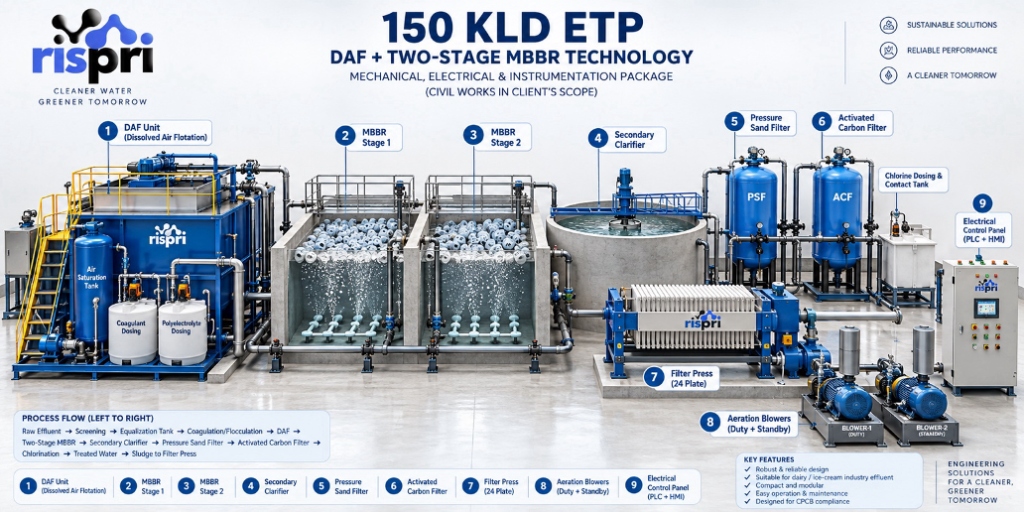
Image: Industrial Effluent Treatment Plant (ETP) Process Flow & DAF/MBBR Clarifier