
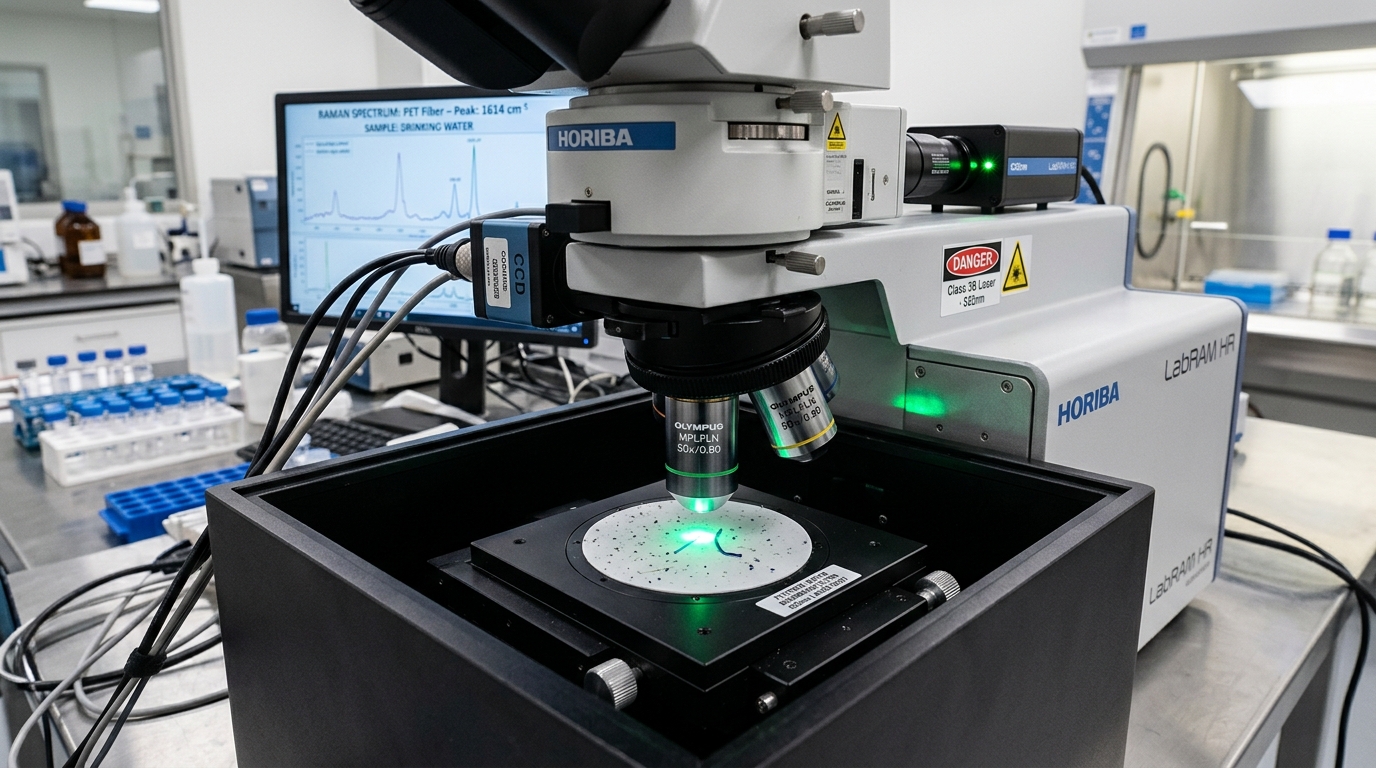
The assumption that depth equals protection from surface contamination no longer holds for plastic particles.
In brief
Research reported in 2026 has found microplastics in groundwater at depths of 60 to 100 metres in parts of rural Karnataka, indicating that the particles can travel through rock fractures to reach deep - water sources previously assumed to be protected. A separate August 2026 study found fish in Delhi's Yamuna stretch carry significantly higher microplastic loads than upstream areas, and India is now ranked among the world's largest contributors of microplastics to waterways.
There's a comforting assumption baked into how most people think about groundwater: the deeper it sits, the safer it is from surface contamination. New research out of rural Karnataka just broke that assumption for microplastics - and did it at a depth of up to 100 metres.
The surface picture is also worsening
An August 2026 study on the Yamuna found that fish in the Delhi stretch carry significantly higher microplastic body loads than fish upstream of the city - direct evidence of urban effluent as the primary accumulation driver. India is now consistently ranked among the world's largest contributors of microplastics to waterways, with tap water quality ranked among the highest - contaminated globally in 2026 surveys. The Indian Council of Medical Research confirmed in 2025 that microplastics are present in human tissues, moving the issue from environmental monitoring to clinical relevance.
The testing gap
Standard water quality parameters tested under CGWA NOC conditions, NABL protocols and municipal supply quality surveillance do not include microplastic screening. There are no Indian regulatory limits for microplastics in drinking water or industrial process water - a gap the WHO has flagged globally as requiring more research before standards can be set. In the meantime, facilities concerned about microplastic intake in water used for food - grade processes, pharmaceutical manufacturing or potable supply are relying on RO systems, which remove particles above approximately 0.001 microns, to provide partial mitigation.
What's being done at the innovation level
In May 2026, Indian teenagers were awarded the Earth Prize for developing a tamarind seed - based coagulant designed to remove microplastics from water - a low - cost, natural - material approach that attracted international attention precisely because most microplastic removal currently depends on energy - intensive advanced filtration. Research into standardised detection protocols is ongoing across CPCB, IITD and several international partners; without comparable methods, cross - study data remain difficult to interpret.
What's genuinely uncertain here is what to do about it: there's no Indian regulatory limit for microplastics in drinking or process water yet, and the WHO itself says more research is needed before standards can even be set. Until that changes, RO filtration remains the only partial mitigation most facilities have - worth knowing as a limitation, not a solution.
Why it matters
Standard water quality testing protocols in India do not routinely screen for microplastics. If deep borewell water in industrial and rural settings is already contaminated, facilities using groundwater for process, cooling or drinking - water applications are drawing an unmeasured pollutant load - one that RO systems partially reduce but that no standard ETP treats for.
Sources
India Times / Opshuddhi.org / ICMRRead original ↗ICMR - microplastics in human tissue confirmation, 2025↗Down to Earth - India's waterway microplastic load↗Found an error? See the Corrections Policy.
Image: Laser Spectroscopy (FTIR/Raman) Microplastic Particle Identification in Water