
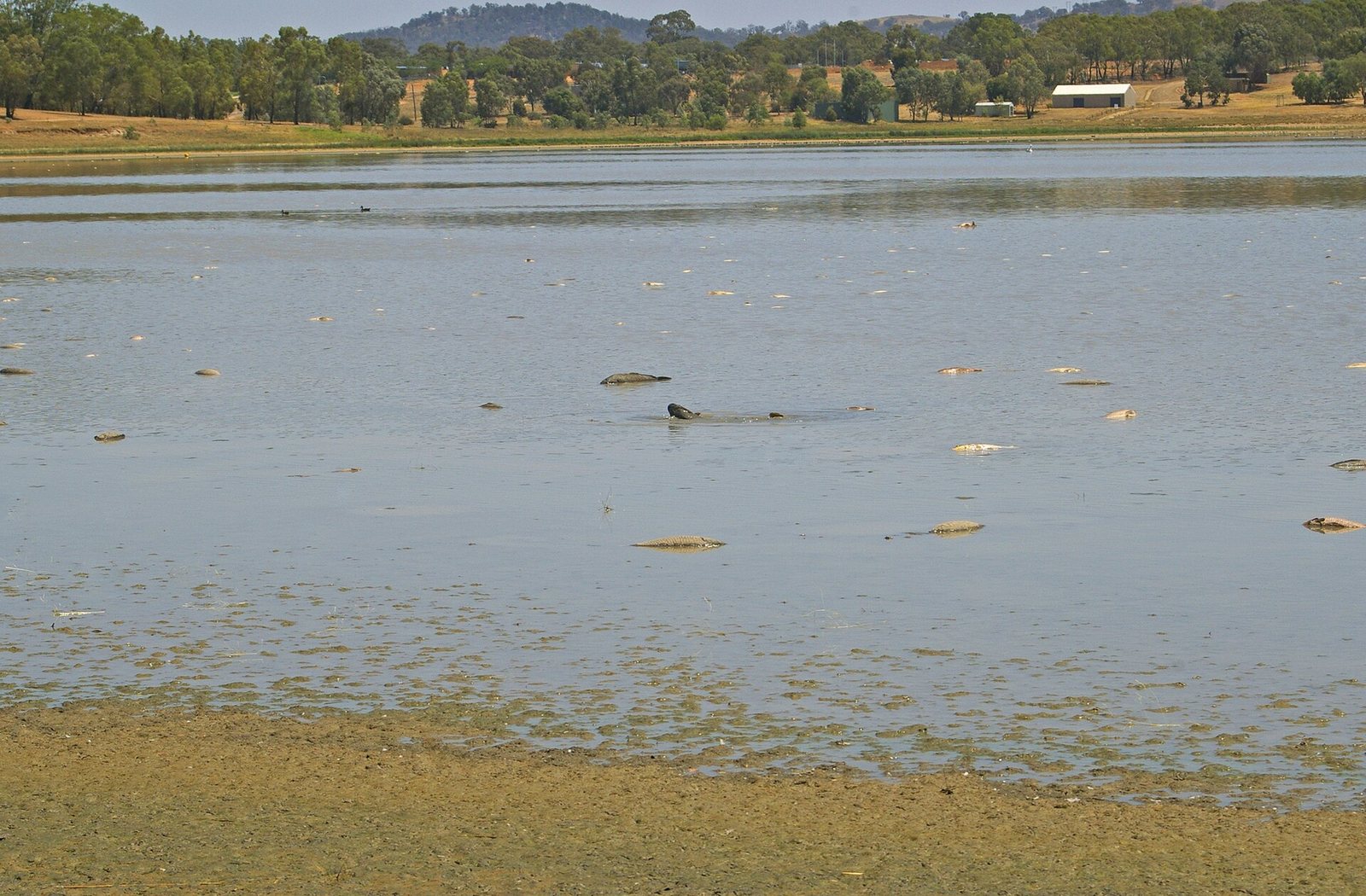
Industrial effluents and chemicals were the main suspected cause in about 20 cases, though many causes remain unconfirmed.
In brief
The South Asia Network on Dams, Rivers and People documented at least 45 mass fish mortality incidents in Indian rivers between November 2025 and November 2026 from media reports. The Ganga basin recorded the most, nine, all in the Yamuna basin.
Dead fish floating in a river are hard to ignore, and a new review suggests it happens often across India. The South Asia Network on Dams, Rivers and People (SANDRP), a research and advocacy network, said on 23 November 2026 that it could document at least 45 incidents of mass fish mortality in Indian rivers over the past year, based on its analysis of available media reports. The true number may differ, since incidents that went unreported are not counted.
Where they happened
About 60% of incidents fell in four basins: the Ganga with nine, the Brahmaputra with seven, the Krishna with six and the Indus with five. SANDRP places all nine Ganga basin cases within the Yamuna basin, including the Yamuna itself and tributaries such as the Sahibi, Chambal and Betwa. The Indrayani near Alandi in Pune district reported deaths in June, September and October, and the Phalguni in Mangaluru at least three times.
Suspected causes
Industrial effluents and chemical pollution were suspected as the main reason in about 20 incidents. Sewage and domestic wastewater were reported as possible contributors in around 10, and some cases involved both. Low flows caused by inadequate dam releases, falling water levels and physical barriers also appear to have played a part, with the Tungabhadra and Cauvery incidents highlighting water shortage.
SANDRP is careful on one point: the precise cause remains unconfirmed in several cases. Oxygen depletion is often reported, but it is the result of polluted or stagnant water rather than the root cause.
Why people should care
June saw the most incidents, nine, followed by April and July with seven each, and October and November with six each. The events were spread across headwaters, tributaries, main channels, creeks and estuaries. SANDRP notes that in Delhi the Yamuna supplies raw water to treatment plants, and that deaths in the Subarnarekha at Jamshedpur raised public health worries for communities that depend on the river.
The group reads the pattern as a continuing failure to keep untreated industrial and municipal waste out of rivers. For plant operators, the practical lesson is to keep dated records of discharge quality, so that a dispute after a kill can be settled by evidence.
Why it matters
A fish kill is often the first visible sign that something has gone wrong upstream. If samples are not taken within hours, the cause is usually never proved and nothing changes.
The main source was published on 23 November 2026.
Found an error? See the Corrections Policy.