
India Water Portal summarises a review in Results in Engineering: moringa could help clarify water in small village systems, but it is not a replacement for alum in large plants.
In brief
An India Water Portal article by Amita Bhaduri (16 November 2026) draws on a review by Shama Kakkar, Nagaraju Dharavat and S.V.N. Pammi in Results in Engineering covering research and patents from 2016 to 2024. It says moringa seed protein can act as a natural coagulant, but that its most realistic role is in decentralised systems as one step in a multi-stage treatment chain.
Moringa, the drumstick tree, may have a second life as a water treatment aid. An India Water Portal article published on 16 November 2026 looks at a review by Shama Kakkar, Nagaraju Dharavat and S.V.N. Pammi in Results in Engineering that covers research, mechanisms and patents from 2016 to 2024. The idea is that proteins in moringa seeds can make suspended particles clump together so they settle or can be filtered, which is the job coagulants such as alum and ferric chloride do in conventional plants.
Where it has been tried
As summarised in the review, local moringa varieties were used to clarify raw and treated urban wastewater in Tunisia. In Malaysia, moringa seed cake was tested on polluted water linked to industrial and landfill sites. In India, moringa seed powder was tried to reduce colour and chemical oxygen demand in textile wastewater. The article reports no numerical results for these studies.
The limits are clear
The review stresses that coagulation is clarification, not purification. Moringa cannot be expected to remove every pathogen, pesticide, pharmaceutical or dissolved contaminant, and dissolved salts need other processes. It also adds organic matter, which can raise the organic load and encourage microbial growth if dosing and downstream treatment are poorly controlled. Seed protein content varies, and fresh extracts degrade quickly, so standard, shelf-stable products are still needed. Crude powder can need relatively high doses, which is why researchers are looking at concentrated proteins, including a patent describing the protein produced in bacterial hosts such as Bacillus.
The most realistic near-term use, the article concludes, is in decentralised systems, such as remote villages and small community schemes, as part of a multi-stage treatment chain with proper quality control. It is not a replacement for alum in large plants. The review also warns that natural does not mean safe: microbial and chemical quality must still be checked.
Why it matters
Coagulation is the step that makes cloudy water settle and filter, and the chemicals used for it cost money and need supply chains. A locally grown alternative is attractive for remote villages, but the review is clear that coagulation only clarifies water: it does not make it safe by itself.
Sources
India Water Portal: From miracle tree to tap: Can moringa help rethink water security? (Amita Bhaduri, 16 November 2026)Read original ↗Results in Engineering review by Kakkar, Dharavat and Pammi (DOI 10.1016/j.rineng.2025.106630)↗The main source was published on 16 November 2026.
Found an error? See the Corrections Policy.
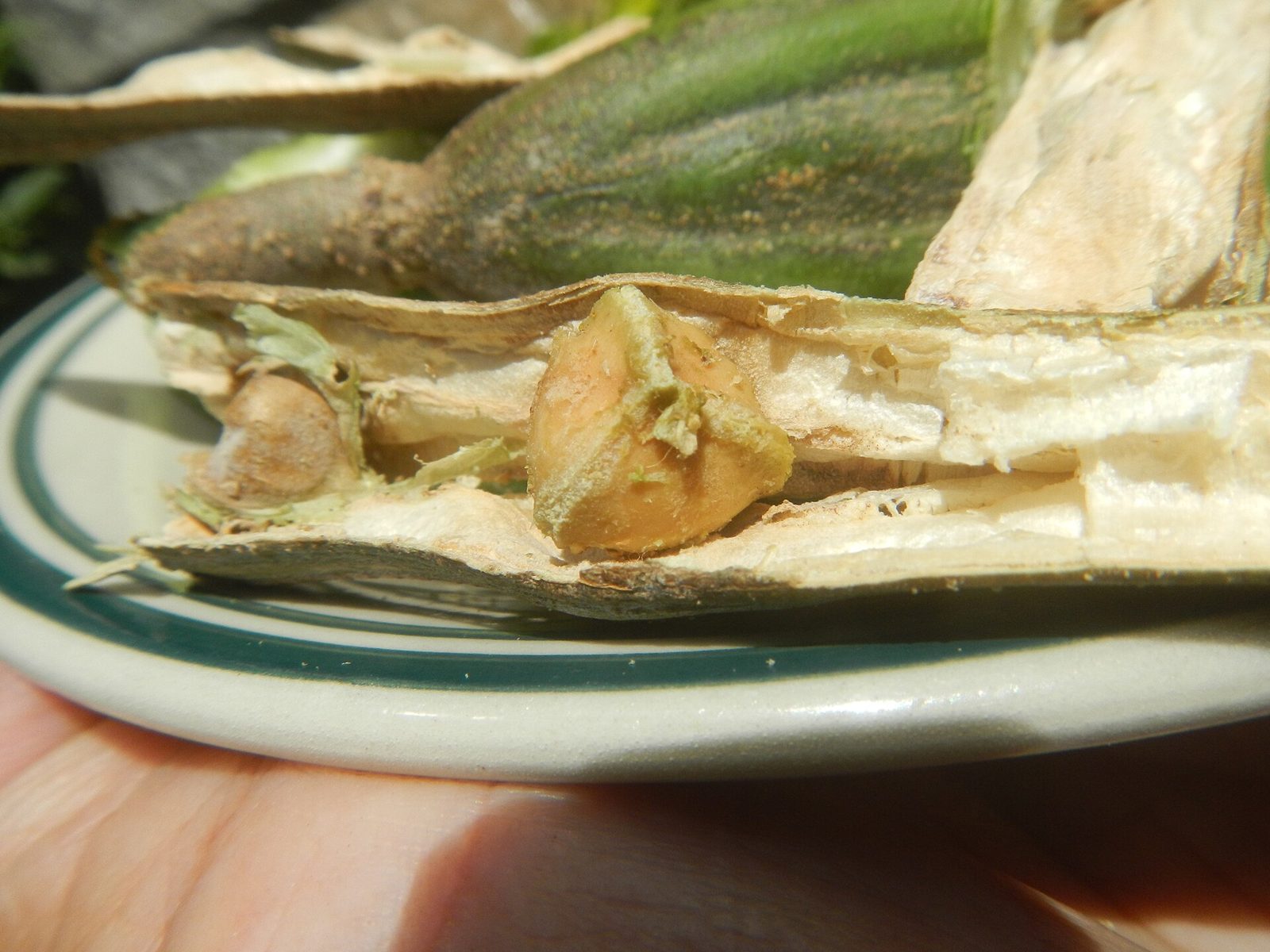
Image: File photo of a moringa pod: Judgefloro / Wikimedia Commons, CC0