
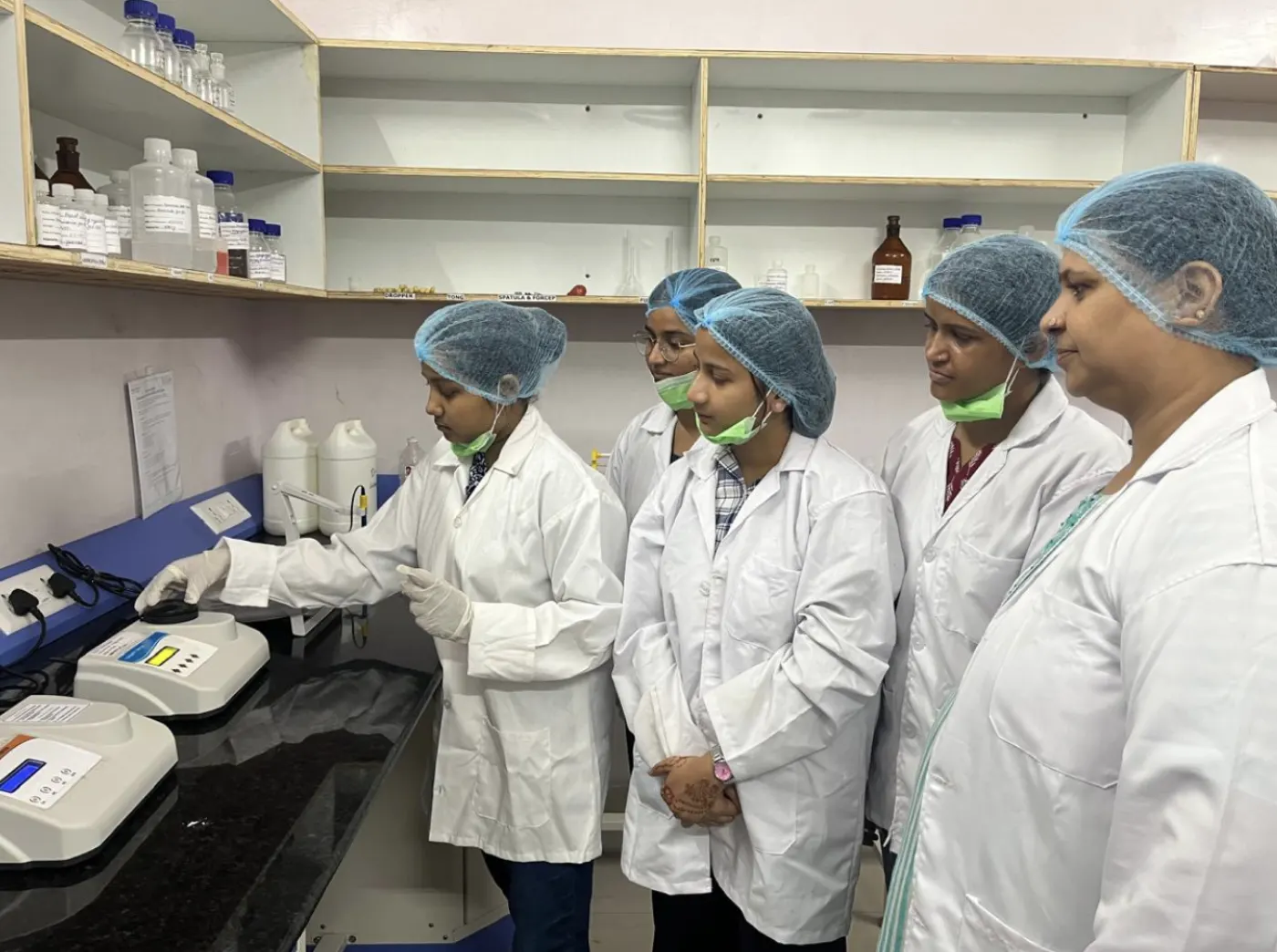
Laboratory trial evaluates UV-Vis spectral absorption sensors against standard dichromate reflux COD across 200 industrial wastewater matrices, highlighting chloride and turbidity distortion.
In brief
On October 8, 2026, the Environmental Analytical Chemistry Division published a comprehensive comparative study evaluating optical UV-Vis spectrophotometric sensors against standard laboratory dichromate COD testing across 200 diverse industrial effluent matrices. While optical probes provide instantaneous non-contact telemetry, high dissolved chloride (>5,000 ppm) and shifting organic molecular weight distributions can cause baseline drift exceeding ±35% without cluster-specific multivariate calibration algorithms.
Continuous Online Effluent Monitoring Systems (OCEMS) have become the regulatory standard across 17 categories of heavily polluting industries in India. However, the vast majority of online probes installed at factory discharge weirs do not physically oxidize wastewater—they measure light absorbance at 254 nm and 550 nm to estimate organic loading mathematically.
The Hidden Failure Modes of Single-Wavelength Probes
In a controlled evaluation of 200 effluent samples from chemical, textile, and dairy facilities, single-wavelength UV absorption probes suffered severe systematic error when tested outside municipal sewage matrices. In textile wastewater containing synthetic azo dyes, chromophore absorbance artificially inflated estimated COD by up to 80% above true NABL wet-chemistry reflux values.
Conversely, in chemical plants with high chloride concentrations (>10,000 ppm), inorganic matrix shifts altered optical refractive indices, leading to baseline false-negative readouts where severe organic shock loads were completely masked on CPCB telemetry dashboards.
Best Practices for Plant Calibration Protocols
The research team recommends that plant operators transition from factory-default linear calibrations toward full-spectrum UV-Vis spectrophotometers utilizing partial least squares (PLS) multi-wavelength compensation. Probes must be calibrated against split-sample wet chemistry reports at least once every 14 days to adjust for seasonal production shifts.
Ensure your online sensor optical path length (cuvette gap) is properly matched to your effluent turbidity: use 1 mm or 2 mm gaps for concentrated ETP equalization basins and 5 mm to 10 mm gaps only on polished final discharge streams.
Understanding the physics and limitations of optical sensors is the single most effective way plant environmental teams can prevent unwarranted regulatory notices and maintain airtight compliance integrity.
Why it matters
Equips environmental engineers and plant managers with the scientific data needed to prevent artificial regulatory non-compliance alerts caused by optical sensor matrix distortion.
Sources
Sensors and Actuators B: Chemical & Environmental Metrology Journal (October 8, 2026)Read original ↗CPCB OCEMS Operational Guidelines for Real-Time Monitoring↗Rispri Labs OCEMS Calibration & NABL Verification Services↗Found an error? See the Corrections Policy.
Image: Analytical Water Chemistry & Certified NABL Testing Laboratory (Rispri Labs)