
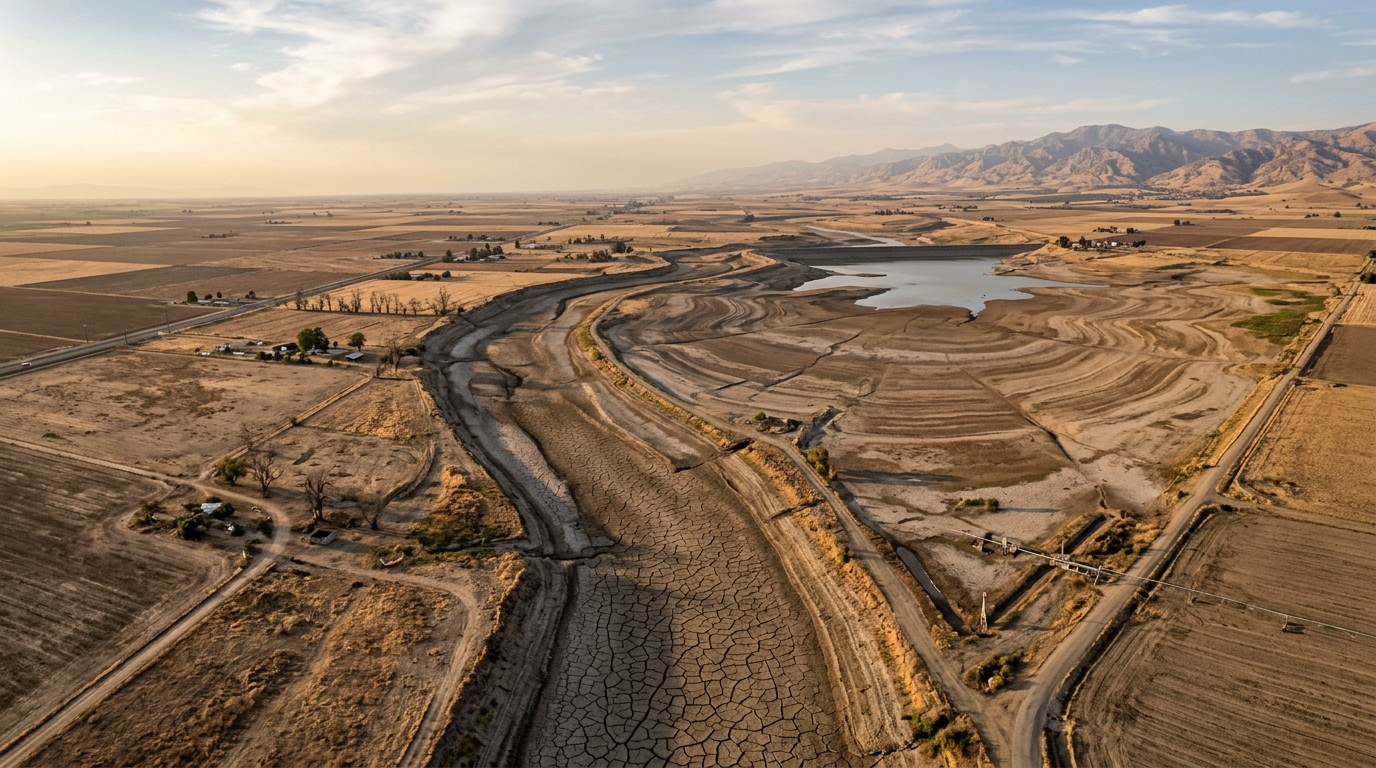
A UN University report argues many rivers and aquifers are so overdrawn they can no longer recover, so policy must adapt rather than wait for a return to normal.
In brief
UNU-INWEH published "Global Water Bankruptcy: Living Beyond Our Hydrological Means in the Post-Crisis Era" on 20 January 2026. Written by institute director Kaveh Madani, it argues that many rivers, lakes and aquifers have been overused so long that they cannot return to their past state. It reports that 70% of major aquifers are in long-term decline.
The UN University Institute for Water, Environment and Health (UNU-INWEH) released its report on 20 January 2026. Its author is the institute's director, Kaveh Madani.
What "water bankruptcy" means
The report defines water bankruptcy as two things together: taking more from rivers and aquifers than nature puts back, for a long time, and losing water-related natural systems in ways that cannot be reversed or would cost too much to fix. In that state, a return to the old normal is no longer realistic.
The numbers behind it
Half of the world's large lakes have lost water since the early 1990s. About 410 million hectares of natural wetlands have disappeared in five decades. The report says 75% of people live in countries that are water-insecure or critically insecure, and 4 billion face severe water scarcity for at least one month a year.
What it recommends
Prevent further damage that cannot be undone, such as wetland loss and uncontrolled pollution. Rebalance water rights to match what is really left. Support fair transitions for affected communities. Transform water-hungry sectors like farming and industry. And build institutions that manage by thresholds and adapt over time.
What to watch next
The report feeds into the 2026 UN Water Conference, co-hosted by the UAE and Senegal and held in the UAE on 2 to 4 December 2026.
Why it matters
If a water source cannot recover, plans that assume it will are dangerous. Industries in over-drawn areas need to plan for permanently less water.
Sources
United Nations University: World enters era of global water bankruptcyRead original ↗Global Water Bankruptcy Report 2026 (PDF)↗IISD SDG Knowledge Hub: Call for reset of global water agenda↗Found an error? See the Corrections Policy.
Image: Global Hydrological Assessment & Arid River Basin Soil Moisture Deficit