
New statutory tariff structure imposes progressive environmental compensation up to ₹180 per cubic meter in over-drafted taluks to eliminate commercial freshwater exploitation.
In brief
On October 5, 2026, the Central Ground Water Authority (CGWA) notified the 2026 Groundwater Abstraction and Regulatory Tariff Guidelines, establishing steep, progressive volumetric extraction cess structures for commercial packaging, brewing, and beverage manufacturers. In over-exploited and critical hydrogeological assessment units, industrial extraction beyond statutory quotas will incur penalty cess charges scaling up to ₹180 per cubic meter, coupled with mandatory quarterly water balance audits.
The Central Ground Water Authority (CGWA) has finalized long-awaited regulatory guidelines designed to eliminate un-priced commercial freshwater extraction across India's most water-stressed hydrogeological zones.
Ending the Era of Free Industrial Groundwater
Historically, commercial beverage producers, packaged drinking water bottlers, and breweries extracted subterranean aquifer water by paying nominal flat annual permit fees. In water-stressed taluks across Rajasthan, Haryana, Punjab, and western Uttar Pradesh, localized groundwater tables were falling by as much as 1.5 to 2.5 meters annually.
Under the new tiered cess structure, industrial plants extracting up to 100 m³/day pay standard conservation charges. However, volumetric pumping exceeding 500 m³/day in over-exploited zones triggers progressive penalty brackets, scaling rapidly up to ₹180 per cubic meter (₹180,000 per 100 kiloliters).
Mandatory 200% Aquifer Replenishment Guarantee
To secure and maintain valid No Objection Certificates (NOC), commercial beverage and packaged water units in critical zones must now demonstrate a 200% artificial recharge ratio: for every liter of groundwater extracted, the facility must recharge two liters of clean surface water into local aquifers via verified managed recharge pits.
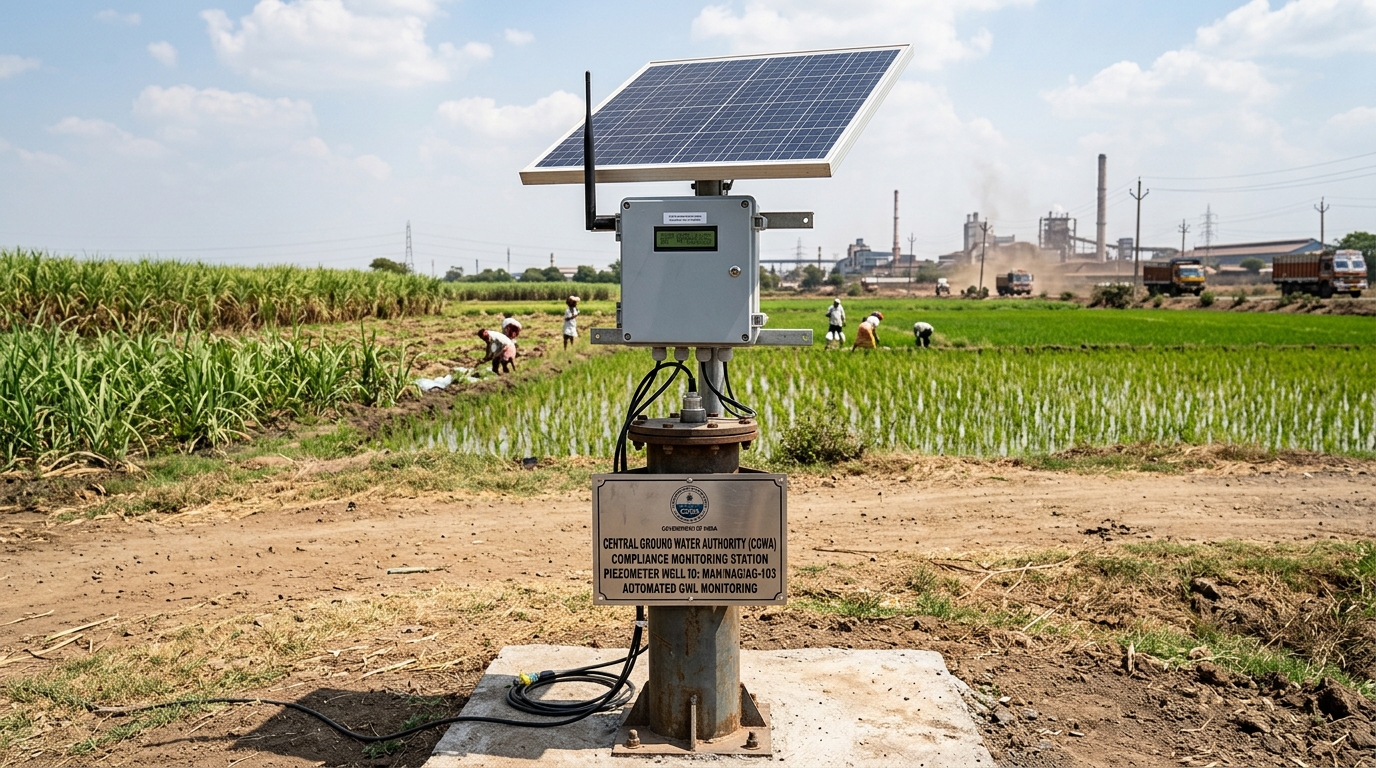
All borewells must be fitted with CGWA-approved ultrasonic flowmeters and tamper-evident digital telemetry streaming live hourly extraction logs to the national groundwater portal.
The economic signal is clear: commercial manufacturers can no longer afford to treat fresh groundwater as a cheap utility, accelerating corporate adoption of water recycling and local community watershed stewardship.
Why it matters
Forces commercial beverage corporations to aggressively invest in rainwater harvesting, tertiary water circularity, and local community aquifer replenishment.
Sources
Central Ground Water Authority Gazette Notification (October 5, 2026)Read original ↗CGWA Groundwater Extraction Tariff Structure and Regulations↗Rispri Labs Industrial Water Auditing & Water Neutrality Certification↗Found an error? See the Corrections Policy.
Image: Automated Digital Piezometer & Real-Time IoT Groundwater Monitoring Station