
Zero Liquid Discharge brine mining combines selective nanofiltration and bipolar electrodialysis, turning environmental ocean waste into valuable critical energy minerals.
In brief
On October 4, 2026, the International Desalination Association (IDA) highlighted the successful commercial demonstration of a circular brine mining facility integrated into a 500,000 m³/day Seawater Reverse Osmosis (SWRO) plant along the Red Sea coast. By utilizing selective crown-ether nanofiltration membranes and bipolar membrane electrodialysis (BMED), the complex extracts 99.8% pure battery-grade magnesium carbonate and high-purity lithium hydroxide directly from concentrated reverse osmosis reject brine.
Seawater reverse osmosis (SWRO) has solved freshwater scarcity for hundreds of coastal cities, but it creates a massive environmental byproduct: for every liter of drinking water produced, approximately 1.2 liters of concentrated hypersaline reject brine (TDS > 70,000 ppm) is pumped back into the sea, altering marine salinity and threatening delicate coral and benthic ecosystems.
The Untapped Treasure in Hypersaline Brine
While ocean brine is traditionally treated as a waste disposal challenge, it is fundamentally a liquid mineral ore. Every cubic meter of reject brine contains rich concentrations of magnesium (over 2,600 mg/L), calcium, sodium chloride, rubidium, and trace lithium—elements critical for aerospace alloys, battery energy storage, and industrial chemicals.
The Red Sea commercial complex deploys a multi-stage mineral extraction train: First, selective nanofiltration membranes separate divalent magnesium and sulfate ions from monovalent sodium chloride. Next, precision carbon dioxide sparging precipitates high-purity magnesium carbonate.
Bipolar Electrodialysis and Lithium Concentration
The remaining brine passes through specialized lithium-selective ceramic sieves and bipolar electrodialysis (BMED) stacks that use electricity to split water molecules, generating industrial-grade hydrochloric acid and sodium hydroxide directly on-site while isolating battery-grade lithium salts.
Mineral revenue from the recovered magnesium and industrial salts offsets the entire electricity bill of the desalination plant, driving the net levelized cost of produced drinking water to zero.
The success of commercial brine mining marks the birth of true circular desalination, proving that high-tech resource recovery can eliminate environmental waste while creating profitable new supply chains.
Why it matters
Transforms the largest environmental liability of seawater desalination—concentrated hypersaline brine disposal—into a highly lucrative supply chain for global electric vehicle batteries.
Sources
International Desalination Association (IDA) Technical Conference & Industry Brief (October 4, 2026)Read original ↗IDA Global Brine Mining and Resource Recovery Initiative↗Rispri Labs Industrial Desalination & ZLD Brine Recovery↗Found an error? See the Corrections Policy.
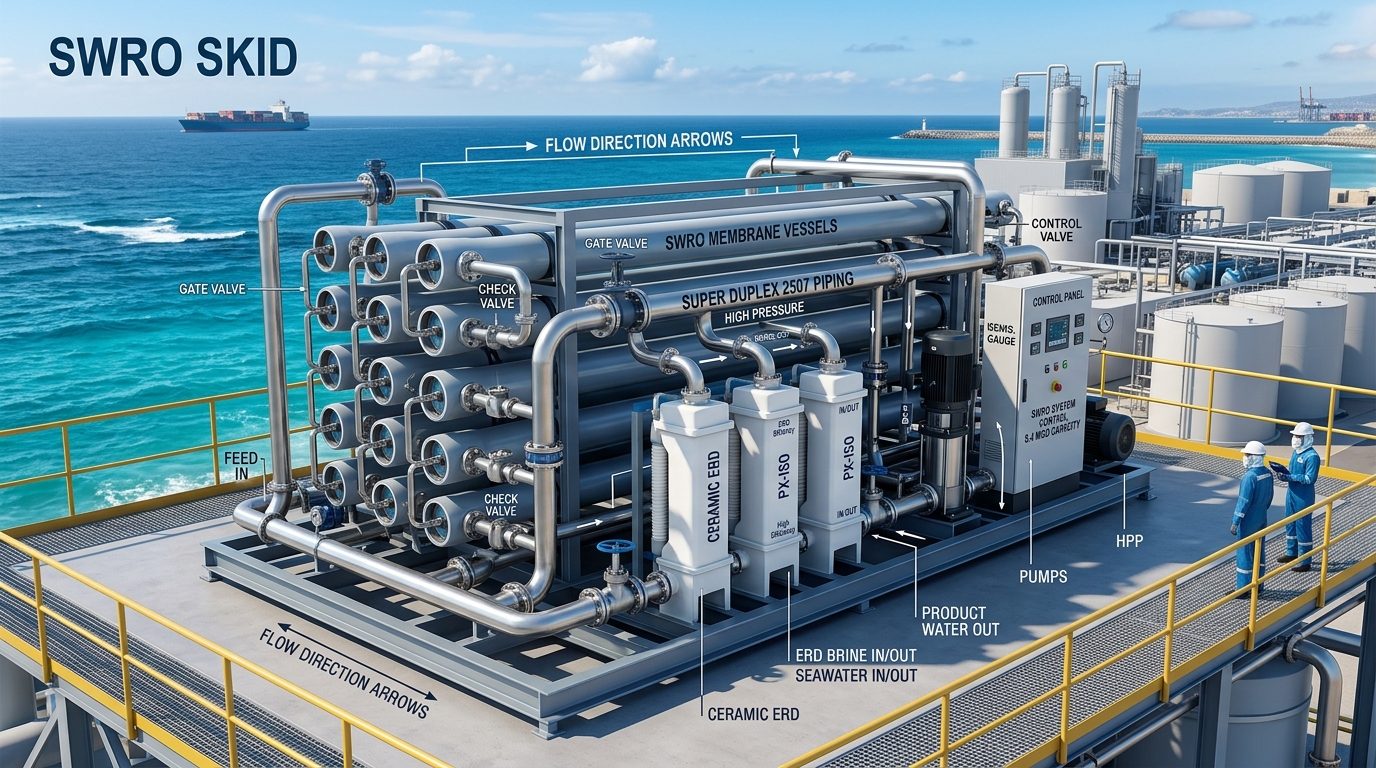
Image: Seawater Reverse Osmosis (SWRO) Membrane Vessels & Isobaric Energy Recovery