
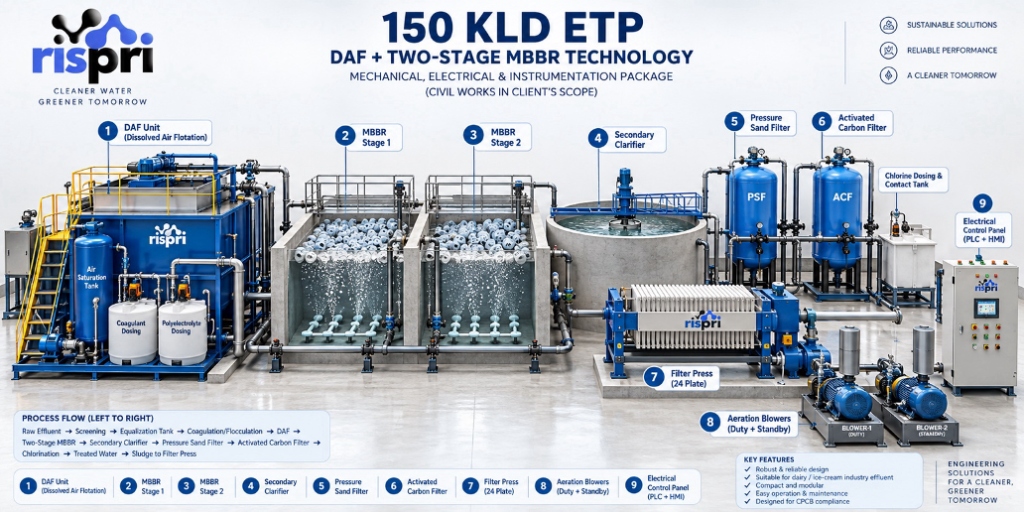
Real-time OCEMS data now feeds central AI algorithms that correlate raw water intake with steam, cooling tower, and effluent flow meters to detect unmetered bypasses.
In brief
On August 31, 2026, the Central Pollution Control Board (CPCB) issued mandatory 2026 technical guidelines requiring 17 categories of highly polluting industries to install multi-point digital flow meters linked to central AI mass-balance engines. The system automatically detects unmetered effluent discharge by matching raw water intake against evaporation losses and treated reuse volumes.
Digital transparency in industrial pollution monitoring has reached a major milestone. On August 31, 2026, CPCB released its updated AI-powered mass-balance compliance protocol for Category-A industrial units including pharmaceuticals, dyes, textiles, distillery, and tanneries.
Continuous Intake-to-Discharge Thermodynamic Water Balancing
Rather than relying solely on single-point end-of-pipe turbidity or COD sensors, the AI algorithm continuously compares raw groundwater abstraction (via CGWA telemetry) against steam generation, cooling tower drift, sludge moisture, and treated water reuse meters.
Eliminating Illegal Bypass and Nighttime Discharges
If an industrial plant's intake meter records 500 KLD while its combined ZLD evaporator and cooling reuse meters report only 250 KLD without documented steam loss, the CPCB system triggers an immediate physical inspection notice and CTO suspension warning.
Why it matters
Manual flow logbooks and static OCEMS sampling are no longer sufficient to maintain Consent to Operate (CTO). AI mass-balance verification closes compliance loopholes for industrial water users across India.
Sources
CPCB Ministry Directive & Industrial Compliance Review (August 31, 2026)Read original ↗CPCB Continuous Online Effluent Monitoring Portal↗Rispri Labs NABL Water Audits & OCEMS Telemetry Calibration↗Found an error? See the Corrections Policy.
Image: Industrial Effluent Treatment Plant (ETP) Process Flow & DAF/MBBR Clarifier