
The closing recommendations of India's biggest water conference favour reuse, recharge and digital tools, but they are advice, not new rules.
In brief
The 9th India International Water Week (IIWW 2026) was held at Bharat Mandapam, New Delhi, in the week of 22 September under the theme "Climate Resilient Water Management". It closed with recommendations calling for more reuse of treated wastewater, community-led groundwater recharge and data-driven decisions. These recommendations are not binding.
The Ministry of Jal Shakti held the 9th India International Water Week at Bharat Mandapam in New Delhi in the week of 22 September 2026. The theme was "Climate Resilient Water Management".
What the closing session recommended
Union Jal Shakti Minister C. R. Patil presided over the closing session. Rajeev Kumar Mital, Director General of the National Mission for Clean Ganga, presented the recommendations.
They call for more participatory water governance, greater reuse of treated wastewater, data-driven decisions, community-led groundwater recharge and wider use of digital tools. They also ask for stronger early warning systems, better water efficiency, sediment management and scientific aquifer mapping.
The detail most reports missed
These are recommendations, not new rules. Nothing in the closing report creates a legal duty for any industry or city.
A stricter idea is circulating separately. Indian Infrastructure reported a proposal from an Uttar Pradesh official: industrial clusters and thermal power stations within 50 km of a working municipal sewage treatment plant (STP) should stop using fresh water altogether. That is a proposal, not national law. It sits alongside Uttar Pradesh's Safe Reuse of Treated Water Policy 2026, which targets reusing 50% of treated used water by 2030 where STPs operate.
What to watch next
Watch for the recommendations to appear in national or state reuse policies. If your plant is close to a municipal STP, check what treated water is available and what quality it would need before you could use it.
Why it matters
The recommendations show where central water policy is heading. Industries that still rely on fresh water for cooling and processing should expect more pressure to switch to treated wastewater.
Sources
Indian Masterminds (report on the IIWW 2026 closing session)Read original ↗Press Information Bureau: IIWW 2026 concludes↗Indian Infrastructure: Government prioritises treated water recycling and reuse↗Found an error? See the Corrections Policy.
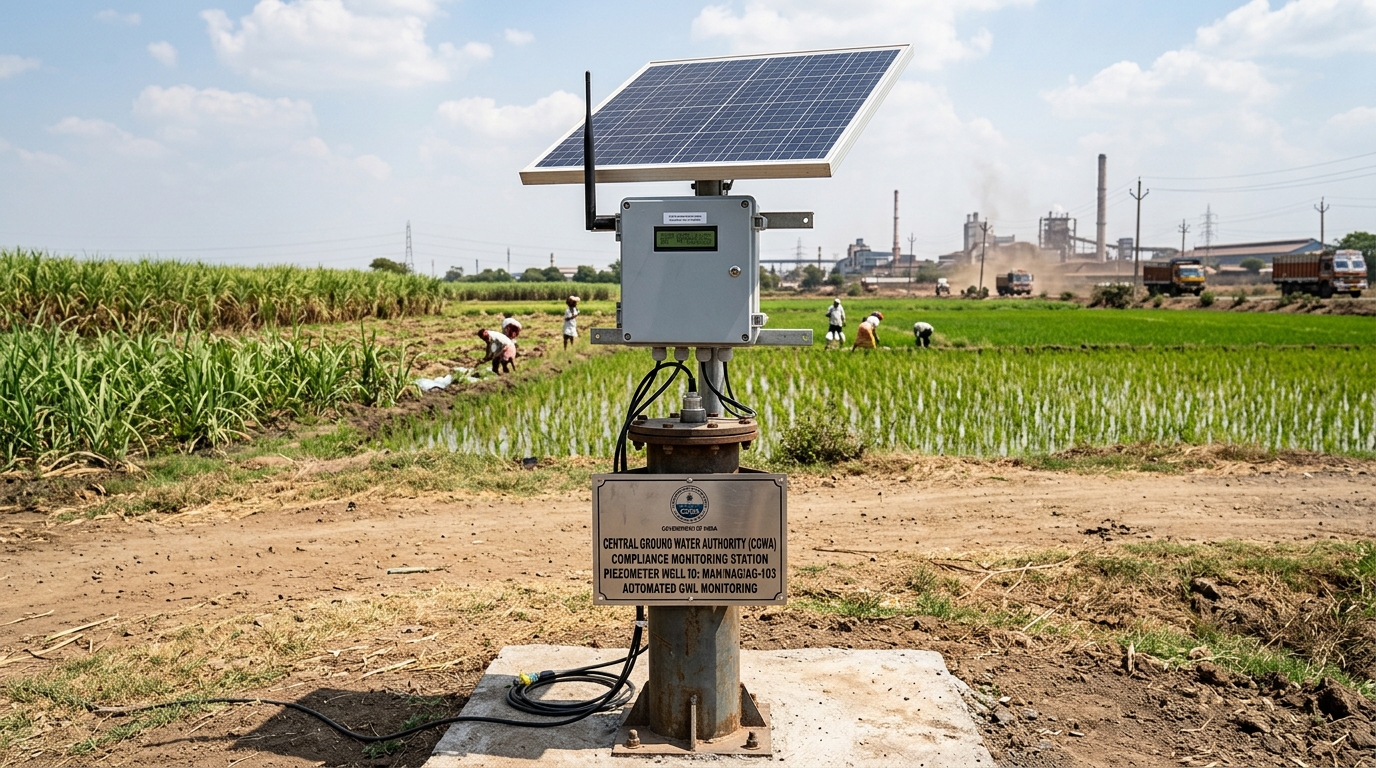
Image: Automated Digital Piezometer & Real-Time IoT Groundwater Monitoring Station