
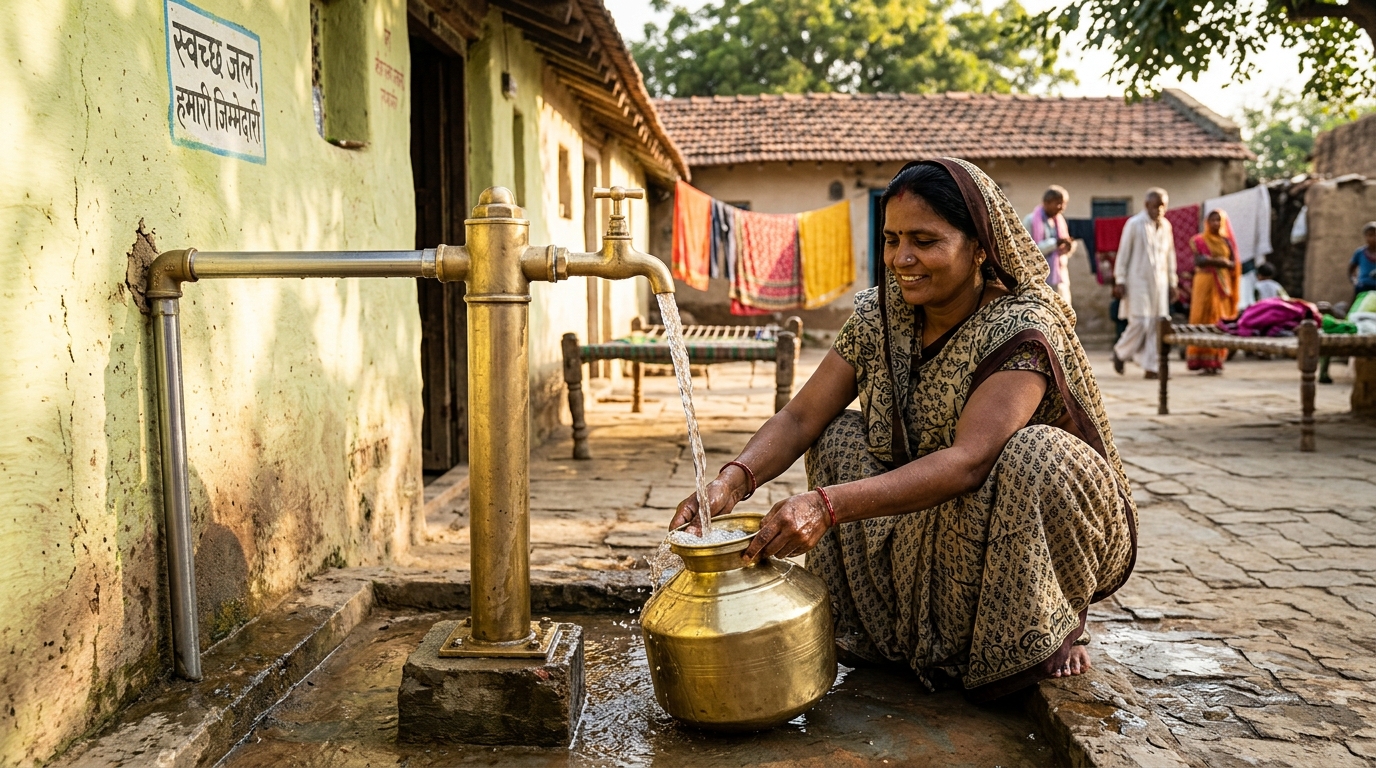
The ₹8.69 lakh crore second phase shifts from building infrastructure to reliable service, with funds tied to reforms and digital asset records.
In brief
The Union Cabinet approved Jal Jeevan Mission 2.0 on 10 March 2026, with a total outlay of ₹8.69 lakh crore, including ₹3.59 lakh crore of central assistance. The mission now runs to December 2028 and shifts from building infrastructure to delivering reliable service. States must meet reform conditions before funds are released.
Jal Jeevan Mission (JJM) set out in 2019 to give every rural home a tap connection. About 81.8% of rural households, 158.3 million of 193.6 million, now have tap water, up from 16.7% in August 2019.
What changes in JJM 2.0
The Union Cabinet approved JJM 2.0 on 10 March 2026 and extended the mission to December 2028. The stated shift is "from an infrastructure-centred approach to a service delivery model": water that reaches homes reliably and safely, not just pipes in the ground.
The details most reports missed
Money now comes with conditions. States must sign reform-linked agreements, validate assets against the Sujalam Bharat GIS-linked asset registry, certify that designs meet CPHEEO norms and reconcile their spending. These steps are meant to stop money going into schemes that exist on paper but do not deliver water.
The mission also stresses digital monitoring, community engagement through annual Jal Utsav campaigns, and reviews at gram panchayat level.
What it means
For contractors, operators and labs, the work shifts to running and maintaining schemes and proving the water is safe. Regular water quality testing becomes central to showing a scheme works.
Why it matters
The focus moves from tap connections to water that actually arrives and is safe, which means more operation, maintenance and water quality testing work.
Sources
Construction World: Cabinet approves Jal Jeevan Mission 2.0 and releases fundsRead original ↗Press Information Bureau: Jal Jeevan Mission 2.0 gains further momentum↗Found an error? See the Corrections Policy.
Image: Piped Rural Drinking Water Infrastructure & Community Tap Standpost