
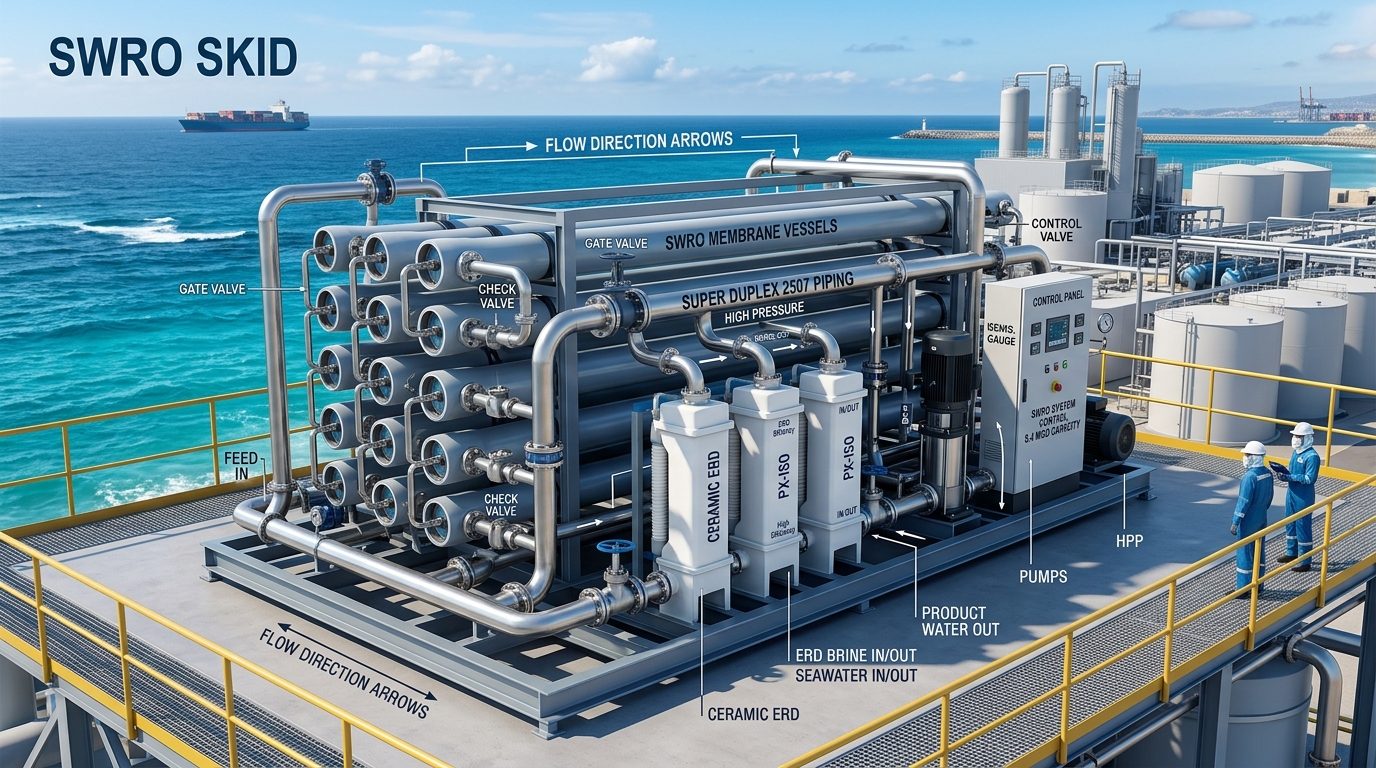
Pioneering mineral extraction plant adjacent to a 100 MIGD desalination facility converts hyper-saline discharge into high-value chemical products, eliminating marine outfall impacts.
In brief
On October 19, 2026, a consortium of desalination and chemical mineral operators officially commissioned a commercial-scale brine mining recovery plant linked to a major 100 million imperial gallon per day (MIGD) SWRO facility. The zero-waste extraction line precipitates high-purity magnesium hydroxide [Mg(OH)2] and battery-precursor sodium chloride from concentrated reverse osmosis brine, eliminating hyper-saline ocean discharge plumes.
Seawater Reverse Osmosis (SWRO) facilities globally produce over 140 million cubic meters of hyper-saline brine daily, traditionally returned to the marine environment through offshore diffusers. The commissioning of the commercial brine valorization plant represents a paradigm shift toward mineral-positive desalination.
Selective Nanofiltration and Chemical Precipitation
The facility receives raw 70,000 mg/L TDS reject brine from the SWRO second-stage skids. An initial nanofiltration stage fractionates divalent cations from monovalent salts. Controlled dosing of industrial sodium hydroxide precipitates magnesium ions as crystalline magnesium hydroxide with a certified purity exceeding 99.2%.
Following magnesium recovery, the softened high-sodium stream enters mechanical vapor recompression crystallizers to produce food-grade and chlor-alkali feedstock sodium chloride, leaving an ultra-concentrated mother liquor enriched with trace potassium, bromine, and rubidium.
By valorizing mineral byproducts, the facility offsets up to 35% of the primary desalination plant's electrical operating costs while protecting fragile coastal seagrass beds and marine benthos from thermal-saline shock.
Industry analysts forecast that co-located mineral recovery will become standard requirement in future coastal desalination concession contracts across water-stressed regions.
Why it matters
Transforms the largest environmental drawback of seawater desalination—concentrated toxic brine outfalls—into a profitable source of domestic industrial minerals and critical materials.
Sources
International Desalination and Reuse Association (IDRA) Bulletin (October 19, 2026)Read original ↗IDRA Circular Economy and Brine Mineral Valorization Committee↗Rispri Labs Industrial Brine Management & Recovery Solutions↗Found an error? See the Corrections Policy.
Image: Seawater Reverse Osmosis (SWRO) Membrane Vessels & Isobaric Energy Recovery