
Enforcement squads deploy automated flow totalizers and unannounced midnight weir split-testing to prevent illicit wet-weather effluent bypasses into the Noyyal and Palar rivers.
In brief
On October 8, 2026, the Tamil Nadu Pollution Control Board (TNPCB) initiated a high-intensity pre-monsoon compliance enforcement drive across 18 Common Effluent Treatment Plants (CETPs) and over 450 textile bleaching and tannery units in Tirupur, Ranipet, and Erode. Special monitoring squads are inspecting RO permeate recovery rates, salt crystallizer inventory logs, and continuous telemetry servers to ensure industrial units do not dilute or bypass untreated effluent during impending northeast monsoon showers.
Ahead of the active northeast monsoon, the Tamil Nadu Pollution Control Board (TNPCB) has deployed specialized environmental inspection task forces across the state's major industrial textile dyeing and leather manufacturing hubs.
Targeting the 'Rainy Day' Bypass Loophole
For years, environmental regulators have struggled with sudden, localized pollution spikes in the Noyyal, Palar, and Bhavani river systems during heavy rainfall. Non-compliant units historically exploited heavy surface stormwater run-off to surreptitiously open emergency bypass valves, flushing high-TDS dyeing liquor and chromium-laden tannery reject into public drains.
Under the new enforcement protocol, inspection teams are cross-referencing factory electricity consumption with chemical sludge manifest logs and automated magnetic flowmeter readings. If a plant's electrical power consumption indicates full-capacity fabric dyeing but its RO permeate totalizer shows suppressed flow, the facility's discharge consent is immediately suspended.
Verifying Salt Recovery Balances
A critical focus of the 2026 drive is the physical verification of sodium sulfate and sodium chloride recovery at thermal crystallizers. Plants are mandated to maintain tamper-proof electronic weight-bridge records for all crystallized salt dispatched to authorized disposal facilities or recycled into dyeing baths.
Any facility found with unsealed stormwater overflow valves connected to process effluent lines faces immediate electrical disconnection and bank guarantee forfeiture under Section 33A of the Water Act.
The TNPCB confirmed that drones equipped with thermal imaging cameras will patrol industrial drainage outfalls throughout October and November to detect illicit warm effluent discharges during nighttime rainfall.
Why it matters
Protects river basins from catastrophic toxic flushes that historically occur when rogue facilities exploit cloudburst events to discharge concentrated saline reject.
Sources
Tamil Nadu Pollution Control Board Press Release & Technical Circular (October 8, 2026)Read original ↗TNPCB Common Effluent Treatment Plant Environmental Data Portal↗Rispri Labs Textile & Tannery ZLD Optimization Desk↗Found an error? See the Corrections Policy.
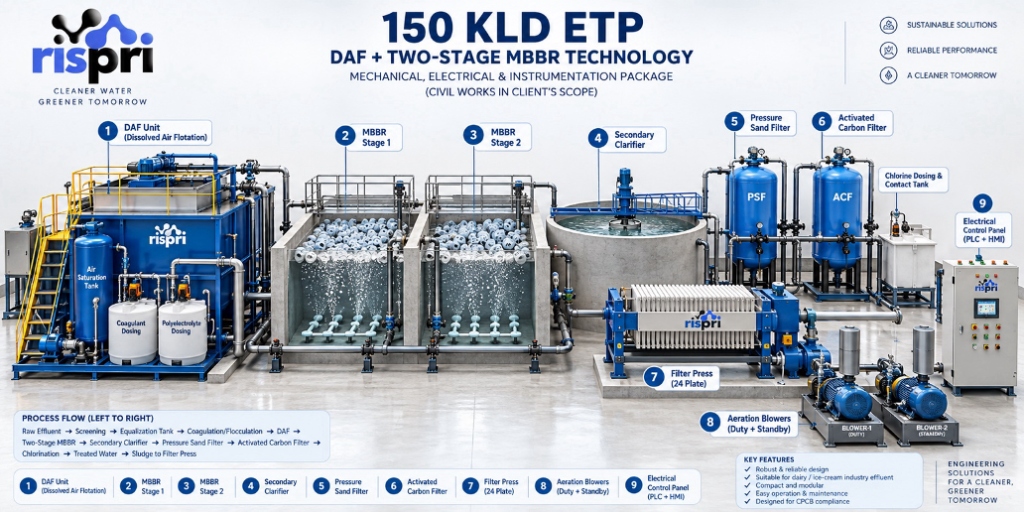
Image: Industrial Effluent Treatment Plant (ETP) Process Flow & DAF/MBBR Clarifier