
In its 4 November order the Court also asked CPCB for a formula to make states pay for damage to the river, and fixed the next hearing for 13 January 2027.
In brief
In an order dated 4 November 2026, a Supreme Court bench of Justices Manoj Misra and Manmohan told CPCB to recommend how states and Union Territories should pay for the deterioration of Yamuna water quality, and asked for a named official to be responsible for every sewage treatment plant and major drain, with monthly compliance affidavits. Supreme Court Observer analysed the order this week.
The Supreme Court has set out how it wants responsibility for the Yamuna's pollution to be fixed, not just who must build what. In an order dated 4 November 2026, a bench of Justices Manoj Misra and Manmohan told the Central Pollution Control Board (CPCB) to recommend a formula for the compensation that states and Union Territories should pay for the deterioration of Yamuna water quality. The Court warned that penalties may follow. The matter began with a 2018 petition by environmentalist Abhisht Kusum Gupta about untreated sewage, and the Court has since widened it to the whole Yamuna basin. Supreme Court Observer analysed the order this week.
What the Court directed
State pollution control boards must give CPCB water quality data where the Yamuna and its major drains enter and leave each state, Union Territory and district, covering BOD, COD, faecal coliform and total suspended solids. The order suggests that institutions such as the IITs could take simultaneous samples to check the data. CPCB must also report on incidents such as dying aquatic life, white foam, algal blooms or sudden jumps in BOD, COD or suspended solids, and name the causes and remedies.
The order asks for the officials responsible for each sewage treatment plant and each major drain to be identified, with monthly compliance affidavits filed in Court. States and Union Territories must name senior nodal officers within two weeks, and urban local bodies must register septage tankers and fit them with GPS tracking. If a state is found liable after an inquiry, the penalty may be recovered from the polluter or from negligent officials.
One rule at the centre
The bench applied the principle of common but differentiated responsibility: each state protects the river as a shared resource, in proportion to its role in the pollution and its ability to control it. Relying on the River Ganga (Rejuvenation, Protection and Management) Authorities Order, 2016, which covers the Yamuna as a Ganga tributary, it held that water leaving a state should be no worse in quality than when it entered.
The plan, and the numbers that do not match
The Yamuna Action Plan submitted in October proposes 125 new sewage treatment plants with a combined capacity of 4,401.30 million litres a day, upgrades to 20 existing plants and 12 new common effluent treatment plants in Haryana. Supreme Court Observer points out two gaps. The plan says 25% of Delhi's treatment plants fall below standard, yet CPCB found that none of 37 plants met it. The plan also assumes no encroachment in Delhi's Zone O floodplain, while a Delhi government annexure marked all 35 water bodies and wetlands there as encroached. The Court has proposed protecting Zone O as a green zone.
What is still open: CPCB has yet to recommend the penalty formula, so no amounts exist. The next hearing is on 13 January 2027.
Why it matters
Most river orders tell an agency to build or fix plants. This one ties each plant and each major drain to a named person and a monthly sworn statement, and it asks for measured water quality where the river enters and leaves each state. For municipal bodies and operators that means data will be checked, compared across borders and used in any penalty.
Sources
Supreme Court Observer: SC weighs penalties for Yamuna water pollution (V. Venkatesan, November 2026)Read original ↗Newslaundry: Lakhs spent on removing the foam on Yamuna. Here's why that won't clean the river (16 November 2026)↗Found an error? See the Corrections Policy.
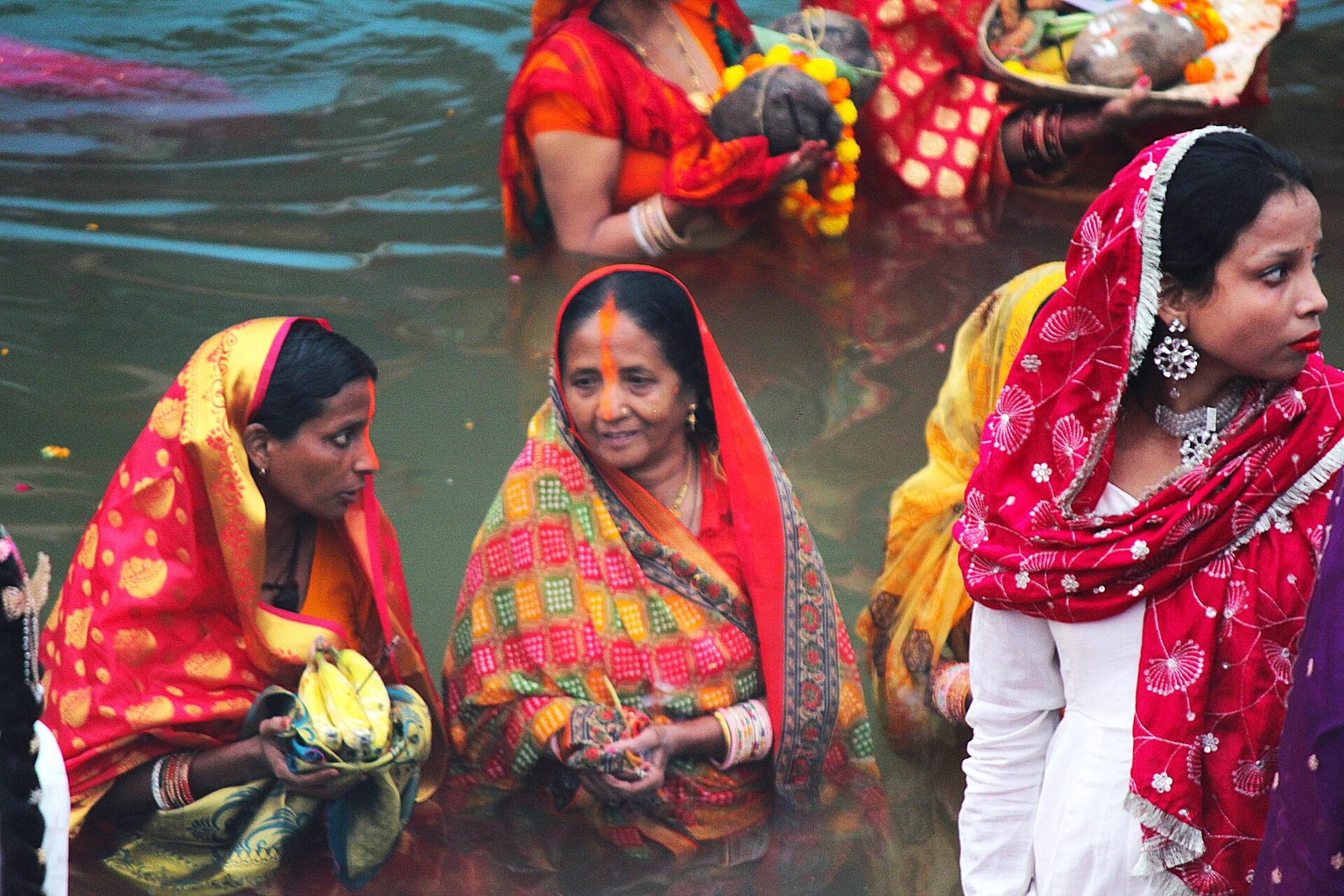
Image: File photo from Chhath Puja 2025: Goutam1962 / Wikimedia Commons, CC BY-SA 4.0